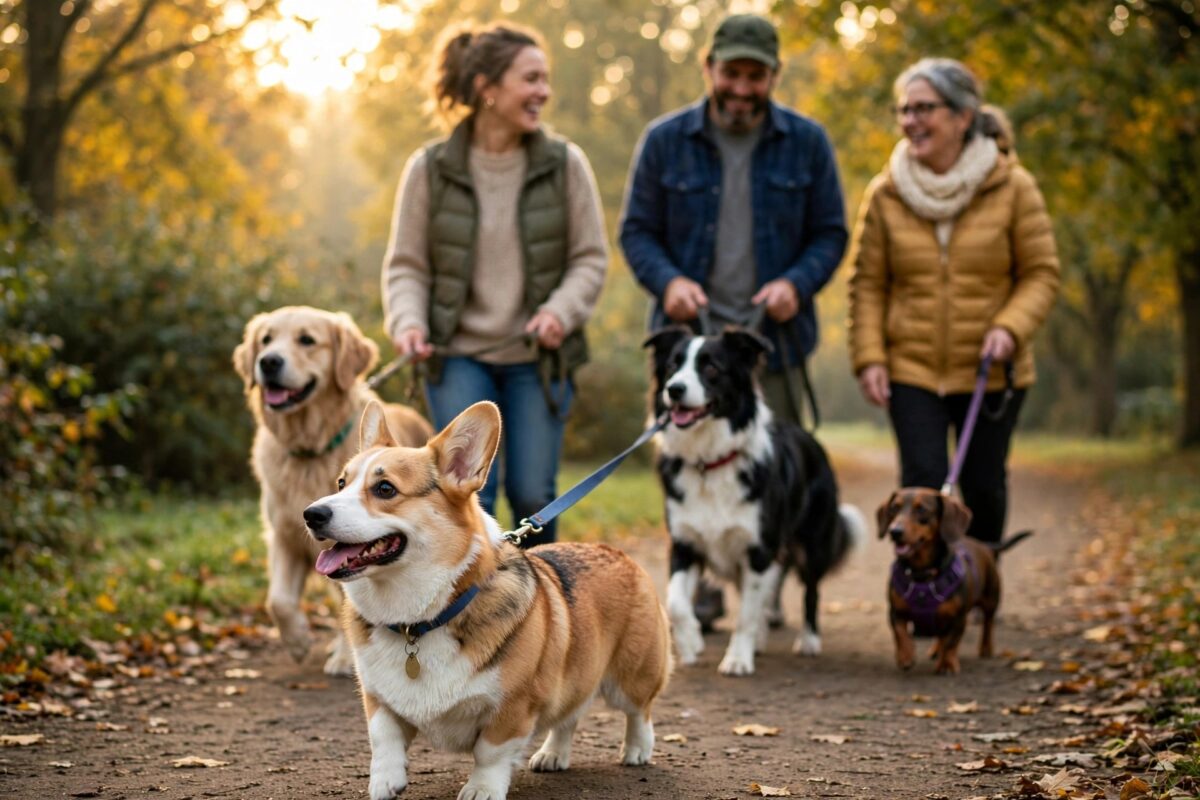
Start small, walk the same route at the same time each weekend, and keep the rules simple enough that nobody has to guess. A friendly weekend dog walking club grows from clear meeting spots, calm introductions, and routes that suit short legs and long strides alike.
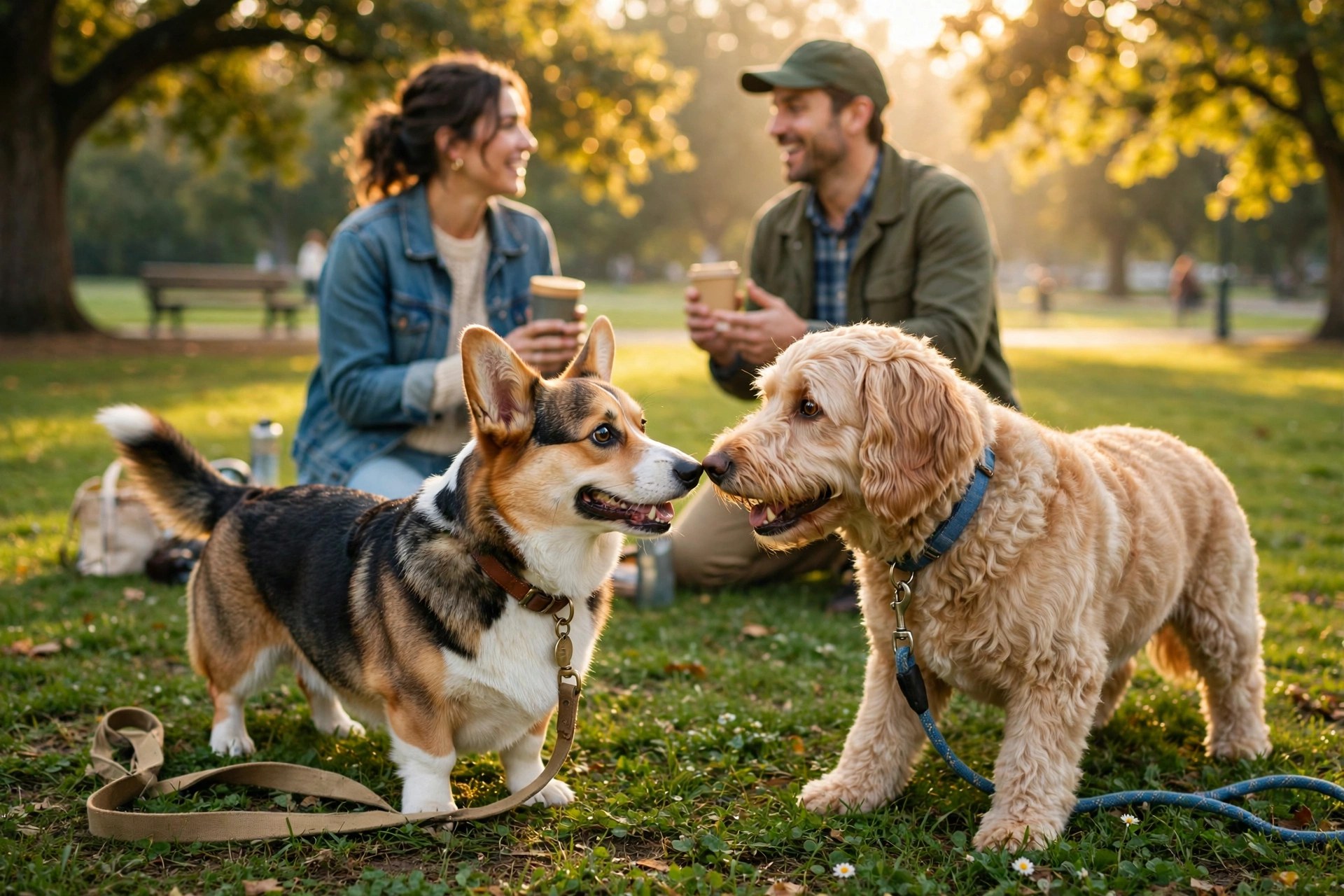
How do you start a dog walking club?
Pick one regular meeting point, choose a short loop everyone can finish comfortably, and invite a handful of nearby dog owners to try it once with no pressure to return. Share three basics before you set off: stay on leash, give other dogs space, and clean up after your own dog.
That’s really it for week one. You don’t need a logo, a signup sheet, or a grand plan. You need a corner of a park, a time that suits most people, and a loop short enough that an older dog or a bouncy puppy can manage it without flagging.
Pick a meeting point people can find without a map pin and a long explanation. A park gate works. So does the bench by the car park, or the wide bit of pavement near the coffee kiosk. If folks can picture the spot from one short message, you’ve chosen well.
Keep the first loop modest, even if you and your dog could happily walk twice as far. A Corgi, for instance, has plenty of enthusiasm but not much ground clearance, and a route that’s easy in dry weather can turn into a muddy slog for short legs after rain. Short loops also give nervous newcomers an easy out. Anyone can peel off at the halfway point and still feel they joined in.
Finding your first walkers
Start with people you already nod to on your normal walks. You know the ones. The spaniel owner at the corner, the retired couple with the grey-muzzled terrier, the neighbor whose puppy pulls toward every dog it sees. A casual “we’re trying a Saturday loop at nine, come along if you fancy it” lands far better than a formal announcement.
Post in a local community group if you’d like a few more faces, but keep the wording plain. Say where you’ll meet, how long the loop takes, and that all dogs stay on leash. Mention that shy dogs are welcome at the back, with space.
Keep invitations low-key
Don’t chase numbers. A group of five or six dogs is plenty while you’re finding your rhythm, and a smaller group lets you learn each dog’s quirks. Who needs distance? Who’s a bit stiff in the mornings? Who will try to herd the entire group, Corgi-style, if given half a chance? You’ll learn all of it faster with a small, steady crew.
What makes a route work for a mixed group of dogs?
A good mixed-group route has wide paths, shade or shelter, a water stop, and an easy way to cut the walk short. Avoid tight bottlenecks where dogs meet face to face, and favor loops over out-and-back paths so slower walkers never feel left behind or rushed by the group coming back.
Walk the route alone first, at the time you plan to meet. Paths that feel roomy on a quiet Tuesday can get crowded on a Saturday morning, and you’ll want to know where the pinch points are. Check for broken glass near benches, bins that overflow, and stretches with no shade at all.
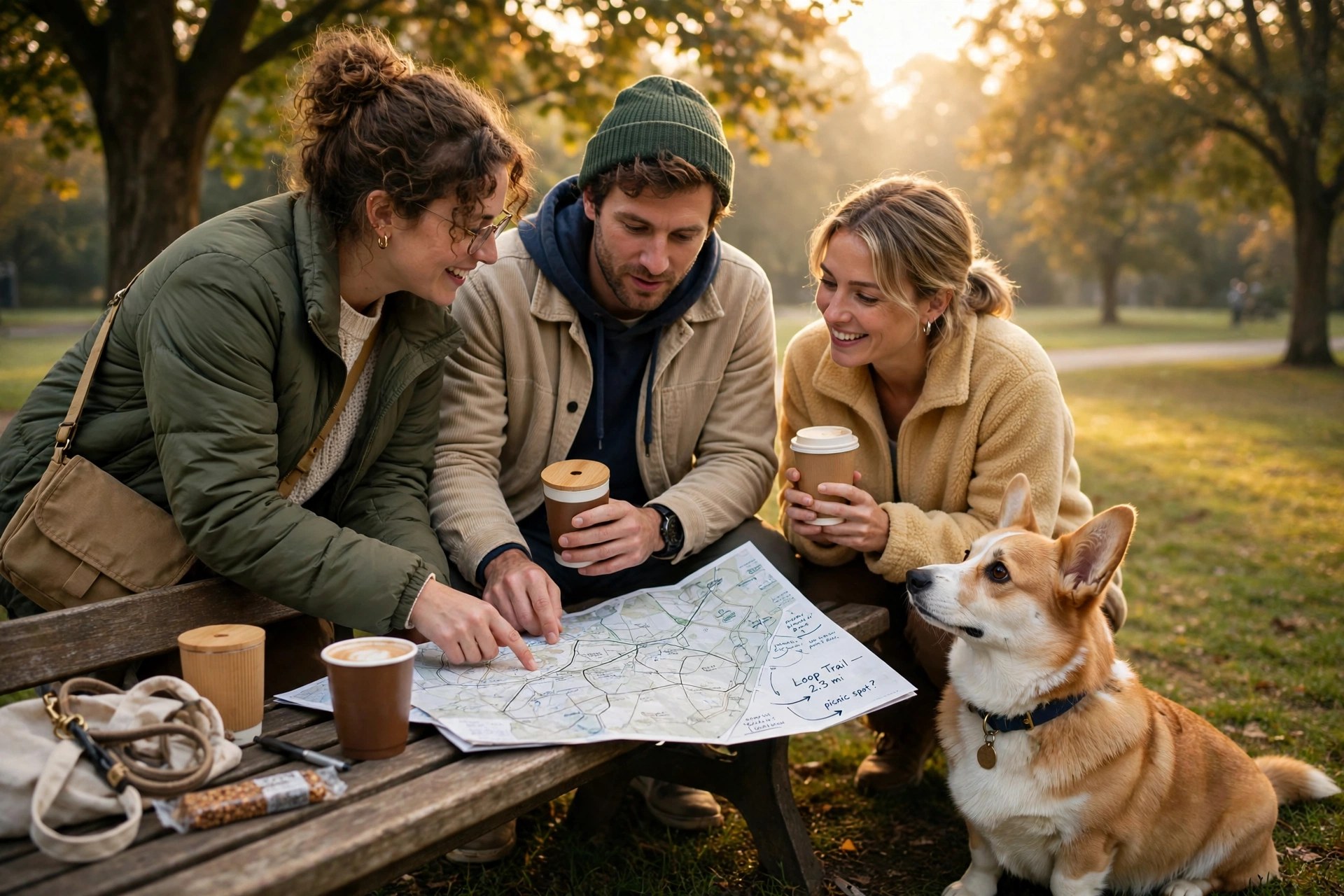
Think about surfaces, too. Gravel can be rough on tender paws, and smooth wet paving gets slippery for everyone. Grass edges beside a hard path give dogs a softer option and give owners a place to step aside when another group passes.
Plan a water stop, even on short walks. Some owners carry bottles and a collapsible bowl, and agreeing to pause at the same spot each week quickly becomes a calming little ritual.
Rules that keep walks relaxed
Three or four shared rules cover nearly every awkward moment. Leashes stay on. Each owner watches their own dog, not everyone else’s. Treats go to your own dog only, unless you ask first, because you never know who has a sensitive stomach or a strict training plan. And if your dog is having an off day, you head home early, no apologies needed.
Say the rules out loud at the start of the first few walks, cheerfully, like a host and not a referee. A gentle “we give the little spaniel a bit of room, she prefers it” works better than a lecture, and soon the group will remind each other.
A good club rule fits in one short sentence, and everyone can repeat it by the second walk.
Space is the rule that does the most work
Most friction on group walks comes down to distance. Encourage folks to walk side by side with a gap, rather than bunching up nose to tail. If two dogs want to say hello, let their owners decide, keep it brief, and move on. Long, tangled greetings in the middle of a path are where leads knot, tempers fray, and small dogs get stepped around. A quick sniff and a cheerful “let’s go” keeps the whole line moving.
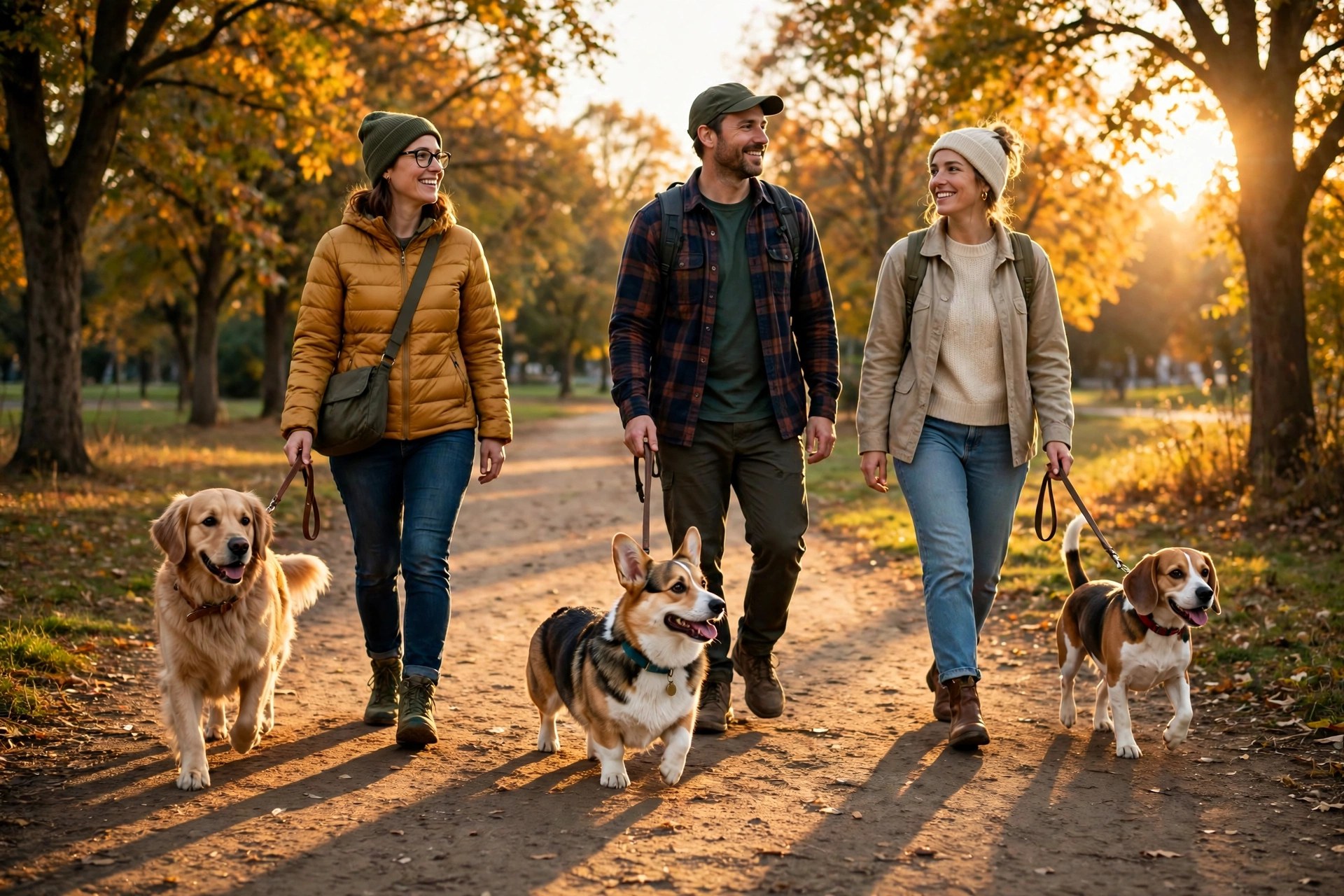
Friendships grow off the path, too
Don’t rush off the moment the loop ends. Ten unhurried minutes by the meeting point, dogs flopped in the shade and owners finishing a coffee, is where a walking group turns into something warmer. That’s when people swap vet recommendations, trade notes on which muddy field to avoid, and start planning next week without you having to organize a thing.
Keep a light touch as the group settles. Rotate who picks the route now and then, and celebrate the small stuff — a shy pup’s first calm walk past the ducks, or a Corgi finally resisting the urge to round everyone up at the gate. Shared jokes carry a club a long way.
Questions new organizers ask us
How many dogs is too many for one walk?
There’s no magic number, but a group you can see all at once is a good guide. If you can’t keep track of every dog from the front to the back of the line, split into two smaller groups and meet up at the end.
What if a dog doesn’t get along with another dog in the group?
It happens, and it’s rarely a big deal if you act early. Walk the two dogs at opposite ends of the group, give them plenty of space, and don’t force greetings. Some dogs simply prefer parallel walking, and that’s fine.
Should the club still walk when the weather is bad?
Light rain? Most dogs couldn’t care less, and a shorter wet-weather loop keeps the routine going. For storms, ice, or serious heat, cancel early and say so in good time so nobody makes a wasted trip.
Do we need permission to walk as a group in a public park?
For a small, informal group of neighbors walking on public paths, you generally just follow the park’s normal rules for dogs. If your group grows large or starts meeting for events, check your local park or council rules first.
Your first-month checklist
- Pick a meeting point that’s easy to describe in one sentence.
- Walk your chosen loop alone once before inviting anyone.
- Invite a small handful of familiar owners, with no pressure to commit.
- Say the three basics out loud before the first walk: leashes on, space for every dog, clean up after your own.
- Build in one regular water and rest stop.
- End with a few unhurried minutes at the meeting point.
- Ask the group what worked, and adjust one thing at a time.
- Set next week’s time before everyone leaves.
That’s your club. Nothing fancy, nothing forced — just a standing date, a kind route, and dogs who’ll start watching the door on Saturday mornings. Show up next week, and the week after that. The friendships, yours and theirs, will handle the rest.
This article was created with AI assistance and reviewed by our editorial team before publishing.
 Cat Playdates for Indoor Cats: Safe Setups and Signs to Stop
 Guinea Pig Playdates: Safe Introductions Step by Step
 First Dog Park Visit? 10 Etiquette Rules to Know
Leave a Reply