The Quick Answer (for the skimmers)
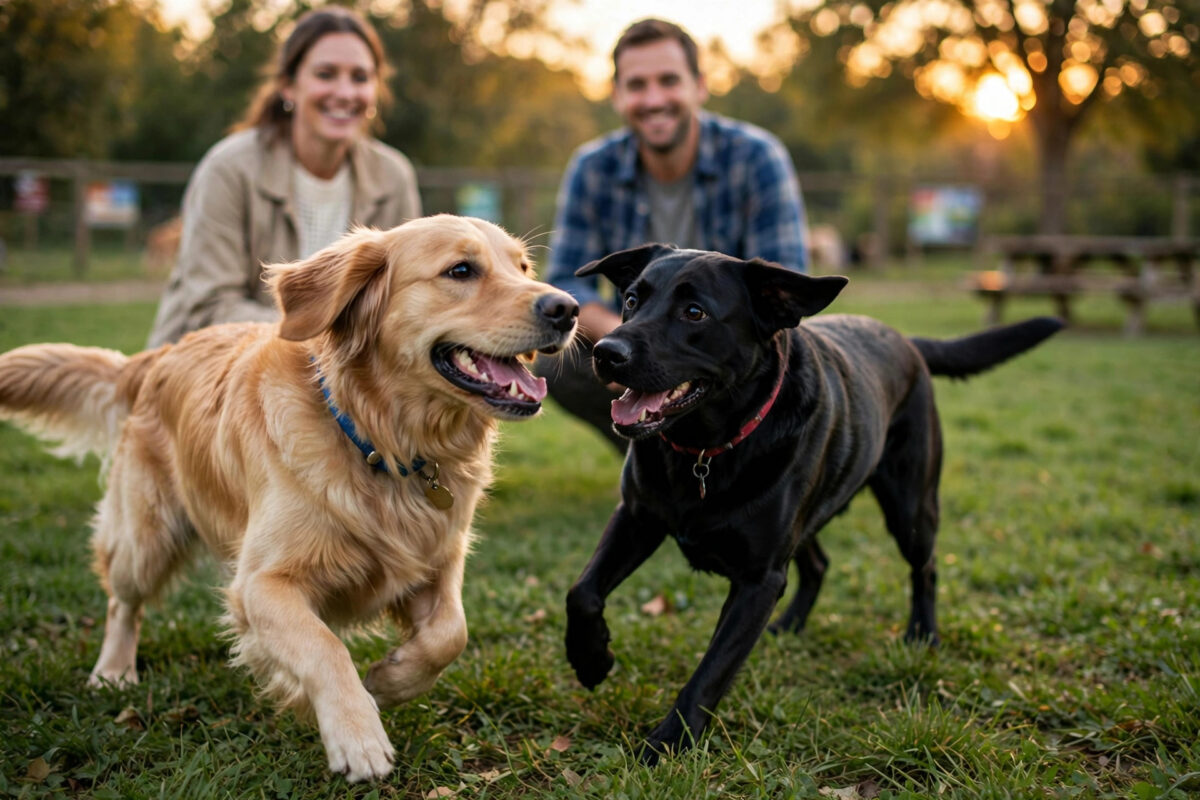
Before your first dog park visit: make sure vaccinations are current, bring water and waste bags, keep your dog leashed until you’re inside the gates, and keep your eyes on your dog the whole time — phone in your pocket. Match your dog with playmates of similar size and energy, skip the park if it’s rowdy or your dog is off, and leave early the moment the fun fades. That’s 90% of dog park etiquette right there.
Still, there’s a lot hiding in that last 10%. A first visit can feel oddly high-stakes — you’re walking into a fenced square full of strangers whose dogs are strangers, and your own dog is vibrating with excitement at the end of the leash. Here’s how to walk through that gate like you’ve done it a hundred times.
Before You Go: The First-Timer’s Checklist
Half of good dog park etiquette happens at home, before you leave the driveway.
- Current vaccinations. Most parks require proof of rabies vaccination, and dog owners are generally expected to keep distemper/parvo and bordetella (kennel cough) shots up to date. Veterinarians and the American Kennel Club generally advise that puppies finish their full vaccination series — usually around 16 weeks of age — before visiting busy dog parks, since young puppies are the most vulnerable to communicable illness.
- Waste bags — more than you think. Bring at least three or four. The park’s dispenser will be empty exactly when you need it.
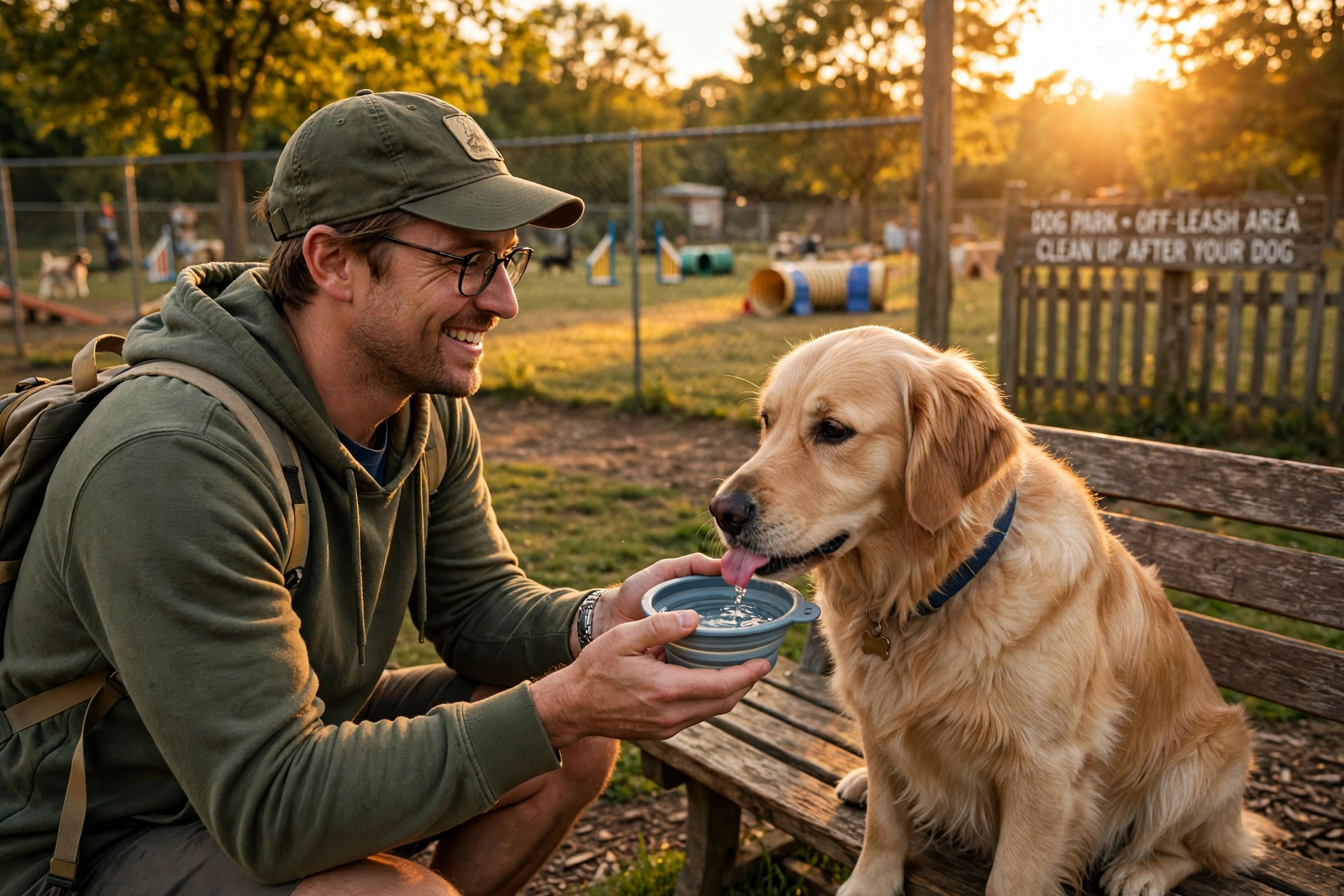
- Water and a bowl. Communal bowls are a germ exchange program; a collapsible bowl takes up no room in your pocket.
- A solid leash. Not a retractable one. Retractable leashes are tripwires in a crowded park, and the American Veterinary Medical Association’s guidance on dog park safety consistently points owners toward flat, fixed-length leashes for control in group settings.
- No treats, no food, no favorite toys. This one surprises first-timers, but it’s a biggie — more on why below.
The 10 Rules of Dog Park Etiquette
1. Enter leashed — unleash inside, not at the car
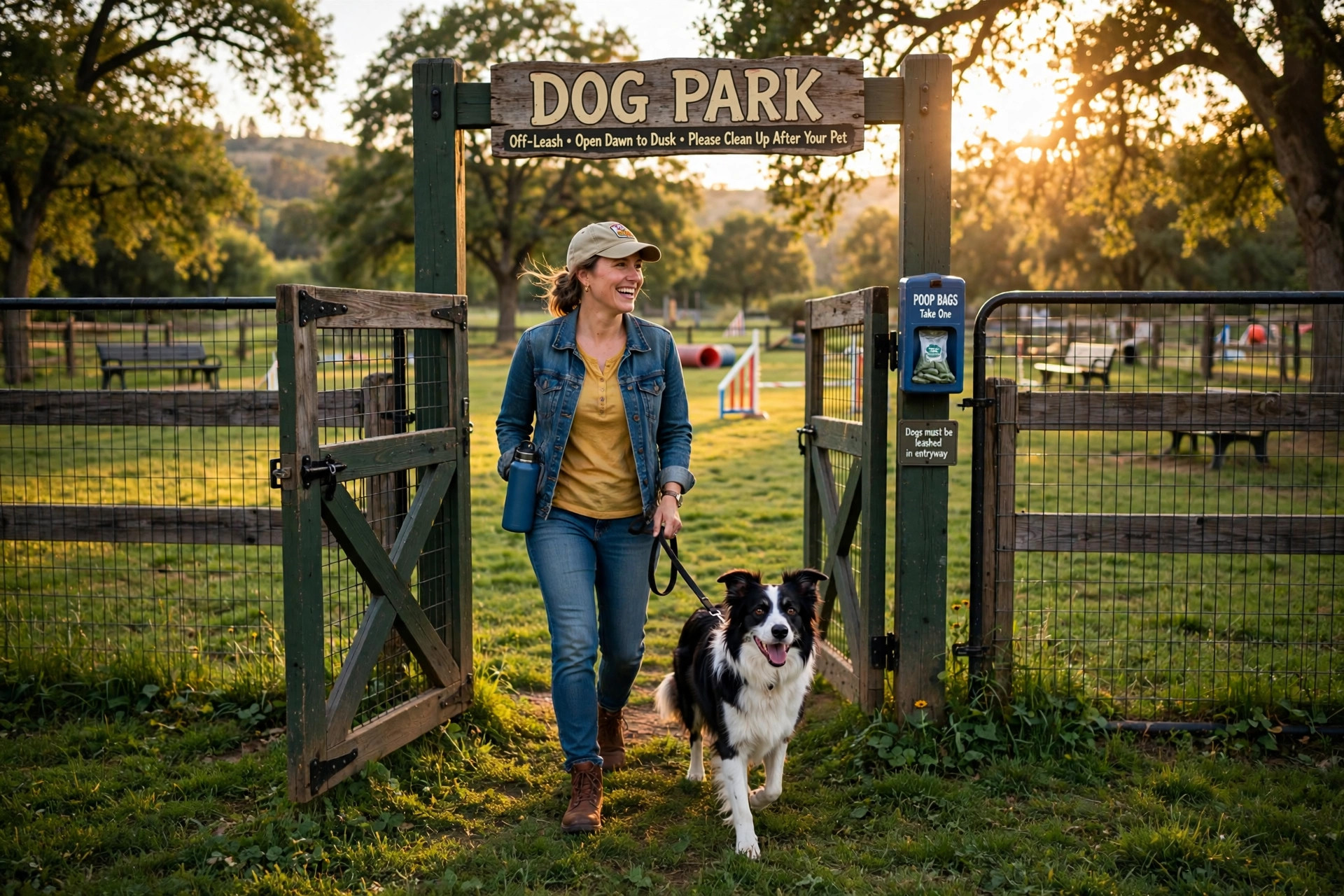
Your dog should be on leash from the parking lot through the entry area, and the leash comes off only once you’re fully inside the fenced area with the gate closed behind you. The double-gated entry system most parks use exists so no dog bolts out while another walks in — the AKC specifically recommends double-gated entrances as a core feature of a well-designed dog park. Unleashing at the car and letting your dog sprint to the fence is the fastest way to announce you’re new.
2. Scope out the scene before you walk in
Stand outside for a minute and watch. How many dogs are in there? What’s the energy — loose and bouncy, or tense with a lot of hard staring? A park with six relaxed dogs is a different proposition than a park with two dogs playing roughly and everyone else standing off to the side. There’s no shame in driving to a different park or coming back in an hour. First visits go best with a calm, moderately busy park — not the Saturday-morning rush hour.
3. Match your dog’s size and energy to the right group
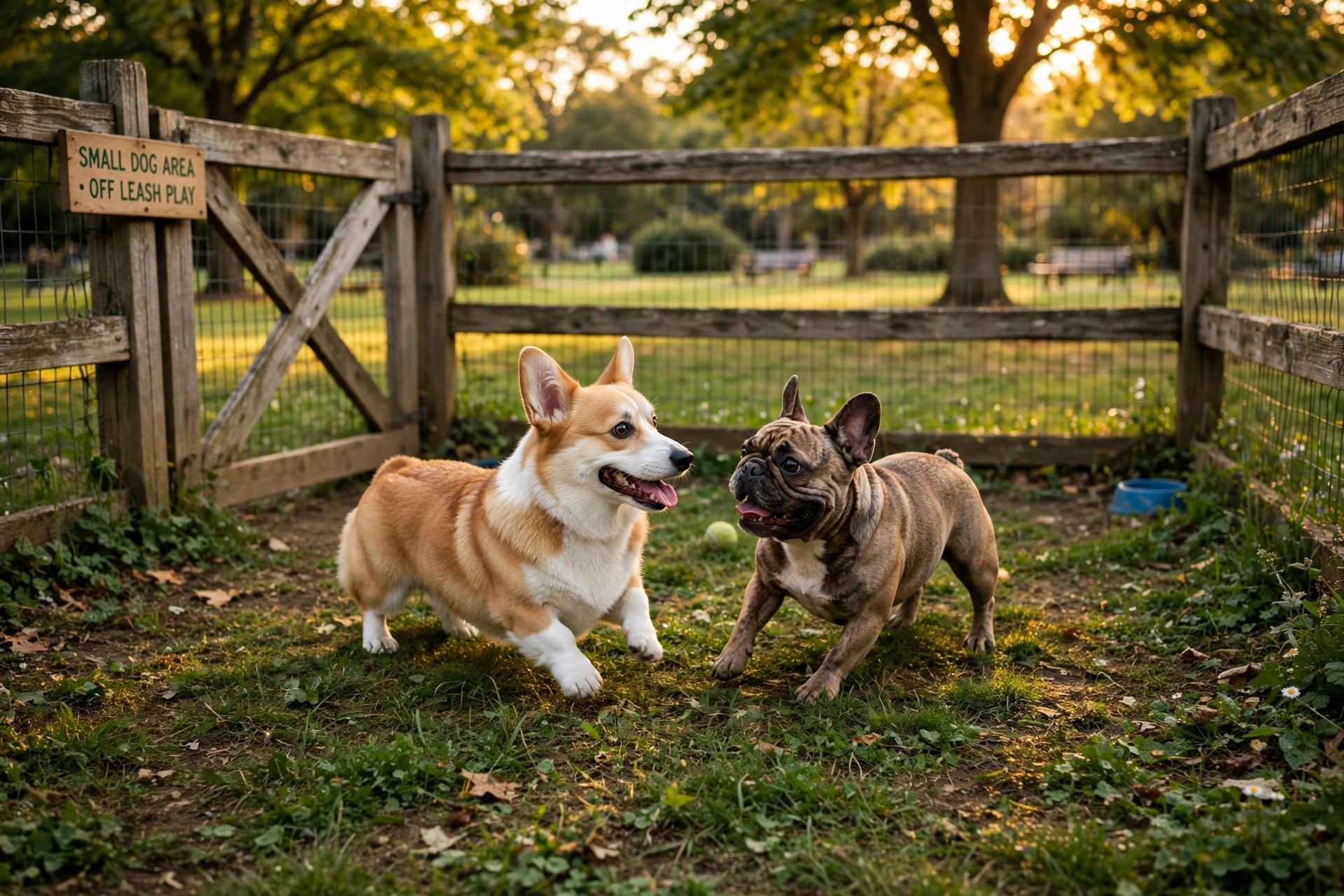
Most parks split into large-dog and small-dog areas, and the line matters. A 70-pound shepherd puppy playing with 8-pound Chihuahuas isn’t cute — one enthusiastic paw is a vet bill. Check the posted weight limit (many parks draw the small-dog line around 25–30 pounds) and be honest about where your dog fits. Energy matters as much as size: a gentle giant is fine with medium dogs; a hyper young Lab might overwhelm dogs half his age even in the big-dog section. When in doubt, start in the calmer area and watch how it goes.
4. Supervise actively — the phone stays in your pocket
This is the rule regulars complain about most. A dog park is not a place to catch up on messages while your dog roams unattended. Most scuffles escalate because nobody noticed the warning signs thirty seconds earlier. You don’t need to hover — just keep your dog in sight, glance up from the conversation regularly, and be ready to move. Think of it like watching toddlers at a playground: relaxed, but present.
5. Learn the difference between play and trouble
Healthy play looks loose: bouncy movements, play bows, taking turns chasing, pausing on their own. Warning signs look stiff: a frozen body, a hard fixed stare, raised hackles that stay up, one dog relentlessly pinning another while the pinned dog tries to escape. Also watch the “bully with a fan club” pattern — one dog dominating every interaction while others scatter. If your dog is the bully, call them off and give everyone a breather. If your dog is being bullied, it’s okay to calmly collect them and move to another part of the park.
6. Keep your group tight — one dog, one handler
Don’t bring more dogs than you can watch. For most people, that means one or two. Three dogs is a pack, and packs at dog parks make other owners nervous — for good reason, since multi-dog owners lose track of individual interactions fast. Also keep kids close. Many parks post minimum-age rules for children (often 10 or 12), and small running children trigger chase instincts in dogs that have never seen a toddler before.
7. No treats, food, or toys inside the fence
Food and high-value toys trigger resource guarding — dogs that are perfectly sweet at home can snap when another dog lunges for their ball. This is why experienced owners eat their snack in the car and leave the squeaky toy at home. If your dog needs a reward for recall practice, train that at home or in an empty corner of the park when no other dogs are nearby. The one exception: some parks have designated toy-friendly hours or areas, clearly posted.
8. Mind the gate
The entry area is the park’s busiest intersection, and it’s where most incidents happen. Don’t let your dog mob newcomers at the gate — that’s how overwhelmed arrivals snap. When you leave, leash up inside the park before opening the gate, then walk out calmly. And if you see someone fumbling with a wiggly dog at the gate, give them space instead of crowding in with yours.
9. Know when to leave — and actually leave
Leave when your dog is tired, when play turns rough and doesn’t reset, when your dog starts pestering one specific dog relentlessly, or when the overall vibe shifts and you feel uneasy. Trust that unease; it’s usually right. Leaving early is never a failure — a 20-minute great visit beats a 60-minute visit that ends with a vet trip. The regulars will respect you more for calling it a day than for letting things slide.
10. Clean up — every time, no exceptions
Pick up after your dog immediately. Don’t wait until you’re leaving; nobody wants to play fetch around landmines. If the park provides bags and a bin, use them. If the dispenser is empty, that’s why you brought your own. This is the simplest rule on the list and the one that keeps parks open — municipalities close dog parks over maintenance complaints more than any other reason.
Small Dog vs. Big Dog Areas: What First-Timers Get Wrong
The most common mistake isn’t choosing wrong — it’s not choosing at all, and letting a small dog wander into the big-dog side “because she likes big dogs.” Plenty of small dogs adore large playmates, but the physics don’t care about affection. A better approach: start in the small-dog area even if your dog is social, and only graduate if your dog is near the weight limit, clearly bored, and the big-dog side looks calm.
One more nuance worth knowing: puppies under about six months often do better in the small or all-dog area regardless of breed, because adult dogs correct rude puppy behavior firmly — and a 90-pound adult’s “correction” can terrify a young pup. Give your puppy a few calm visits before throwing them into the deep end.
When to Skip the Dog Park Entirely
Dog parks are wonderful — for the right dog on the right day. Skip the visit if your dog is sick, coughing, or has diarrhea; if a female dog is in heat (most parks explicitly ban dogs in heat, and intact males will mob her); if your dog has a bite history or serious reactivity; or if your dog is simply having an off day. A long sniffy walk is a perfectly good substitute, and nobody at the park will ever know you almost came.
FAQ: First Dog Park Visit
How old should my puppy be before visiting a dog park?
Most veterinarians and the AKC recommend waiting until your puppy has completed its full vaccination series, which is usually around 16 weeks of age. Even then, start with short visits during quiet hours so the experience stays positive.
Can I bring treats to the dog park?
It’s best not to. Treats and food can trigger resource guarding in unfamiliar dogs, which is a common cause of scuffles. Save the treats for training at home or use them in an empty area away from other dogs.
What should I do if another dog is bullying mine?
Stay calm and collect your dog with a cheerful recall rather than chasing or grabbing. Move to another part of the park, and if the behavior follows you, leave — there’s always another day. Don’t confront the other owner aggressively; a brief, polite “could you please call your dog?” works better.
Should I physically break up a dog fight?
Never reach for collars or put your hands near mouths — that’s how people get bitten. Make loud noise, throw a jacket over the dogs, or spray water to startle them apart. Once separated, leash both dogs and leave the park. If any dog is injured, exchange contact information like you would after a car accident.
Park visits land late in the first month for a reason. Our complete first-month guide for new pets shows where socialization fits in the four-week timeline, and why slow introductions come first.
This article was created with AI assistance and reviewed by our editorial team before publishing.
 Cat Playdates for Indoor Cats: Safe Setups and Signs to Stop
 Guinea Pig Playdates: Safe Introductions Step by Step
 Shiba Inu for Beginners: Loyal, Foxy, Strong-Willed
Leave a Reply