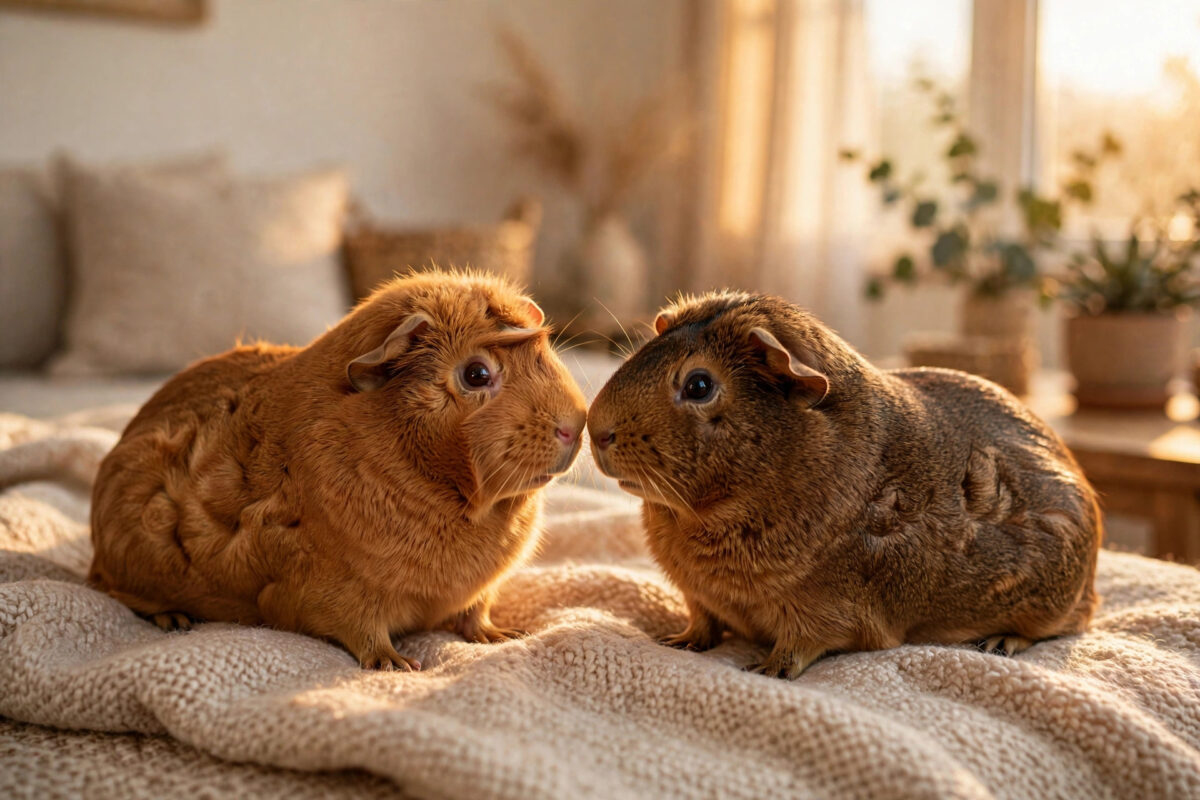
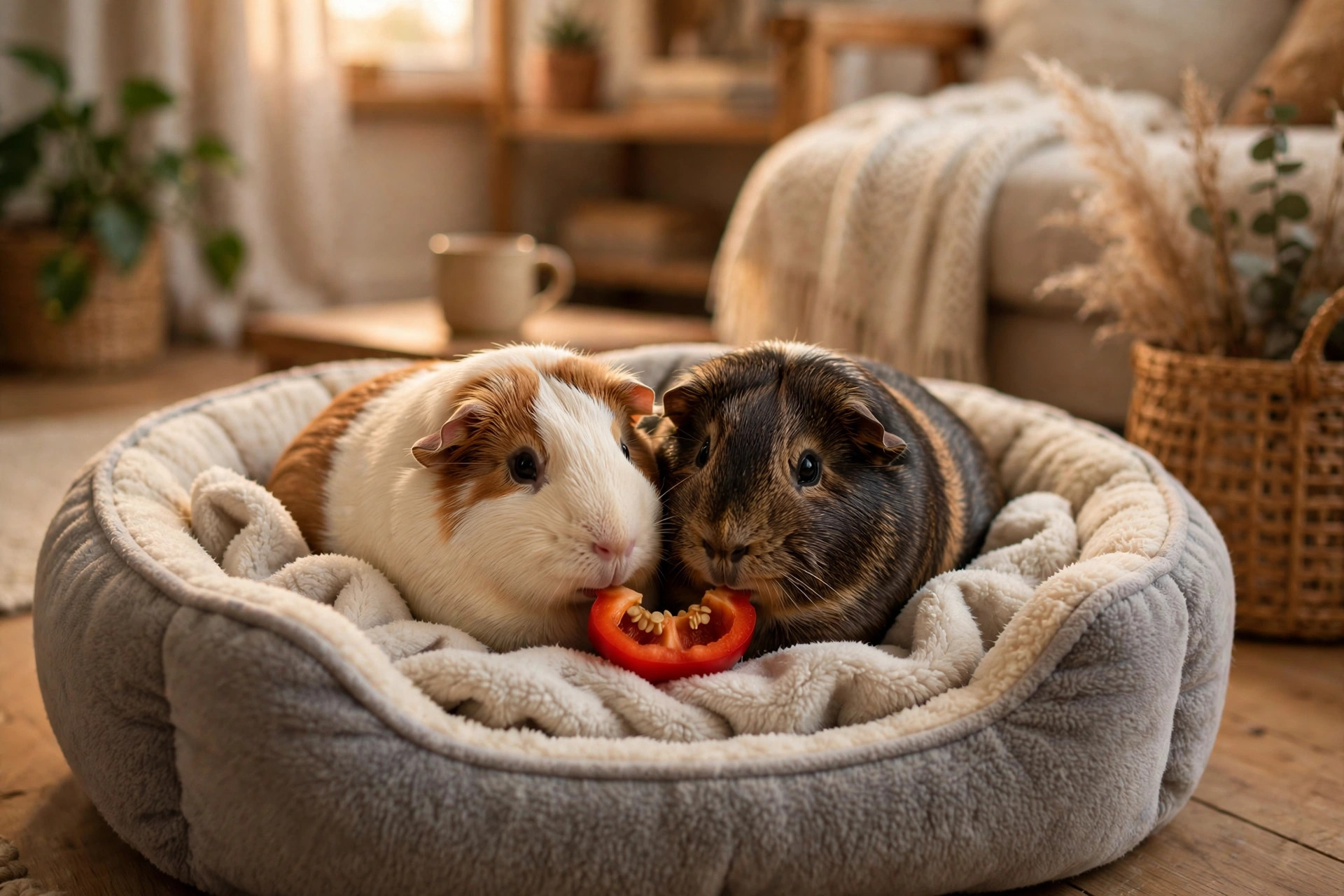
Guinea pig playdates work best when they aren’t really playdates at all. Think slow introduction, not party. Put both pigs in a big neutral space neither one owns, give them two hideys, two hay piles and an easy exit each, watch body language for the first stretch, and end the session while things are still calm. Same-sex pairs or a neutered male with a female are the usual match, and a health check — plus a settle-in period for any newcomer — comes before they ever meet nose to nose.
That probably sounds less fun than just plopping them together. Fair. But guinea pigs are prey animals with strong opinions about territory, and a rushed meeting can turn a promising friendship into teeth-chattering stress in about thirty seconds.
Why guinea pigs need company in the first place
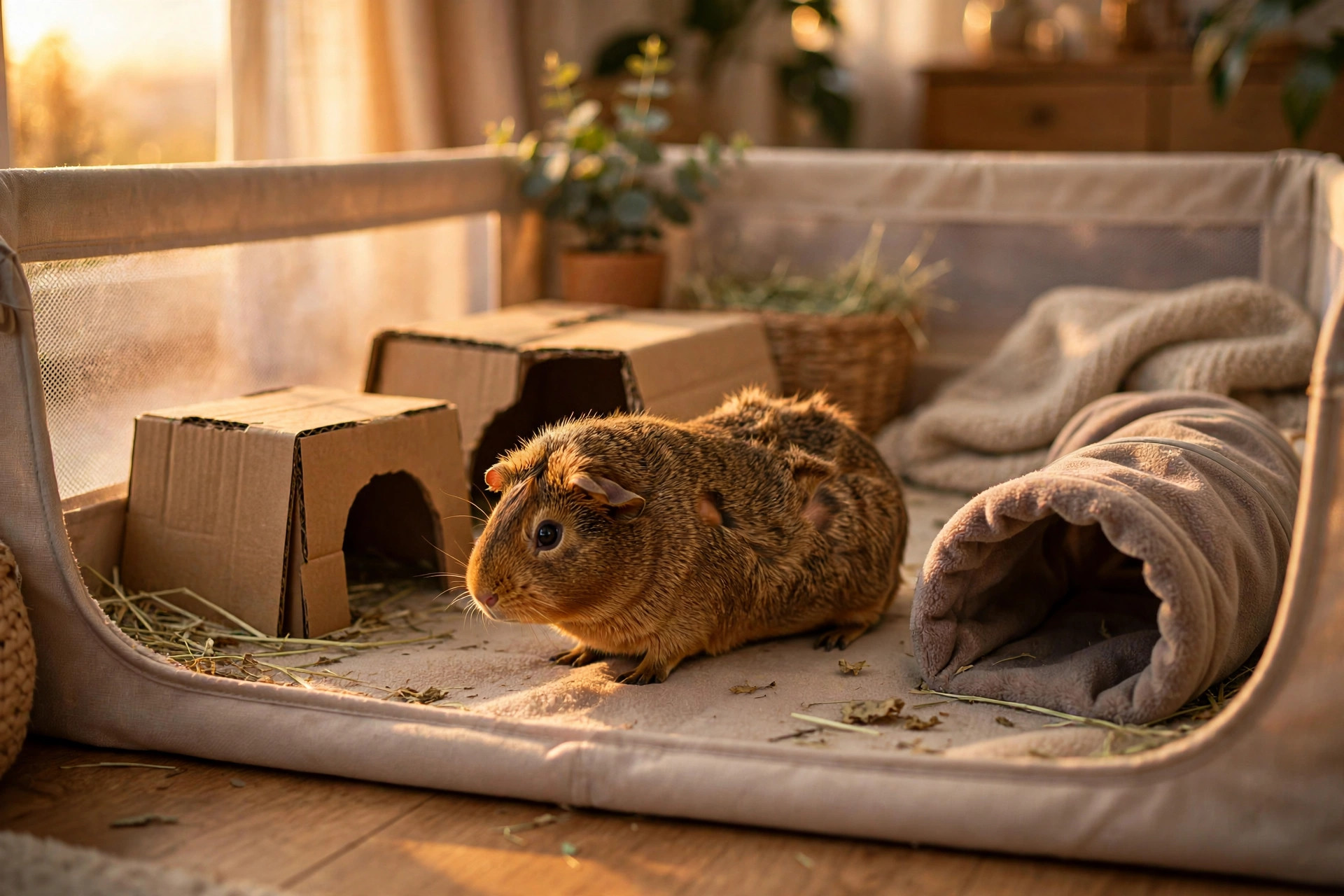
Guinea pigs are social animals. The RSPCA advises keeping them in friendly pairs or small groups, because a pig on its own can get lonely and stressed even if you spend a lot of time with it. Human company helps. It doesn’t replace another pig who speaks the same language — the wheeks, the rumbling, the quiet side-by-side grazing.
That’s the real goal here. Not a cute photo. A companion your pig can live with, eat next to and nap near, day after day.
Good news? Most introductions go fine if you slow down. The pigs do most of the work. Your job is setup, supervision and knowing when to call it a day.
Before any meeting: health, sex and timing
Skip this part and the sweetest introduction plan falls apart.
Check the sexes — twice
Only introduce same-sex pairs, or a neutered male with a female, unless you are deliberately and responsibly breeding — which is a whole separate commitment. Mis-sexing is surprisingly common, especially with young pigs, so ask a vet or an experienced rescue to confirm. An accidental litter is not the kind of community growth anyone needs.
New pig? Give it time first
A newcomer should settle into your home in its own separate cage first, in a different part of the room if you can manage it. Wash your hands between handling the new pig and your resident pig during that settle-in stretch. If the new pig shows signs of illness — sneezing, crusty eyes, scratching, weight loss — see a vet and hold off on introductions entirely.
Neutered males need a wait too
If a male has just been neutered, ask your vet how long to wait before he meets a female. Don’t guess at this one. Your vet knows the individual animal and can give you a clear date.
Setting up neutral ground
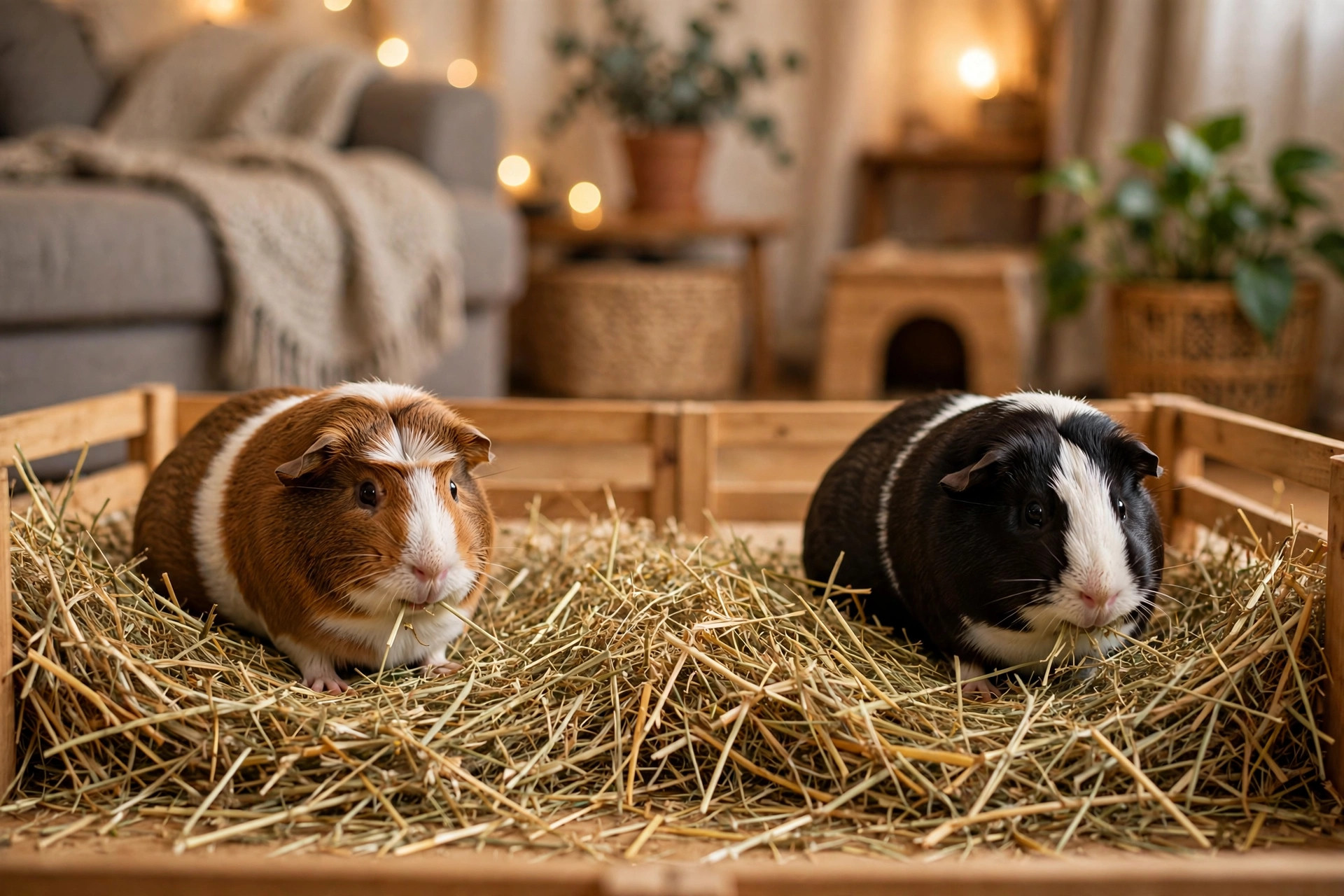
Neutral means neutral. Not the resident pig’s cage, not its usual playpen corner, not anywhere that smells strongly of one pig. A bathroom floor, a hallway blocked off with grids, a large pen on grass — any of those can work, as long as it’s new to both.
Set it up like this:
- Space. Bigger than you think. Cramped pens raise tension fast.
- Two of everything. Two hideys with two exits each, two hay piles, two water sources, scattered veggies in more than one spot. Nothing worth guarding.
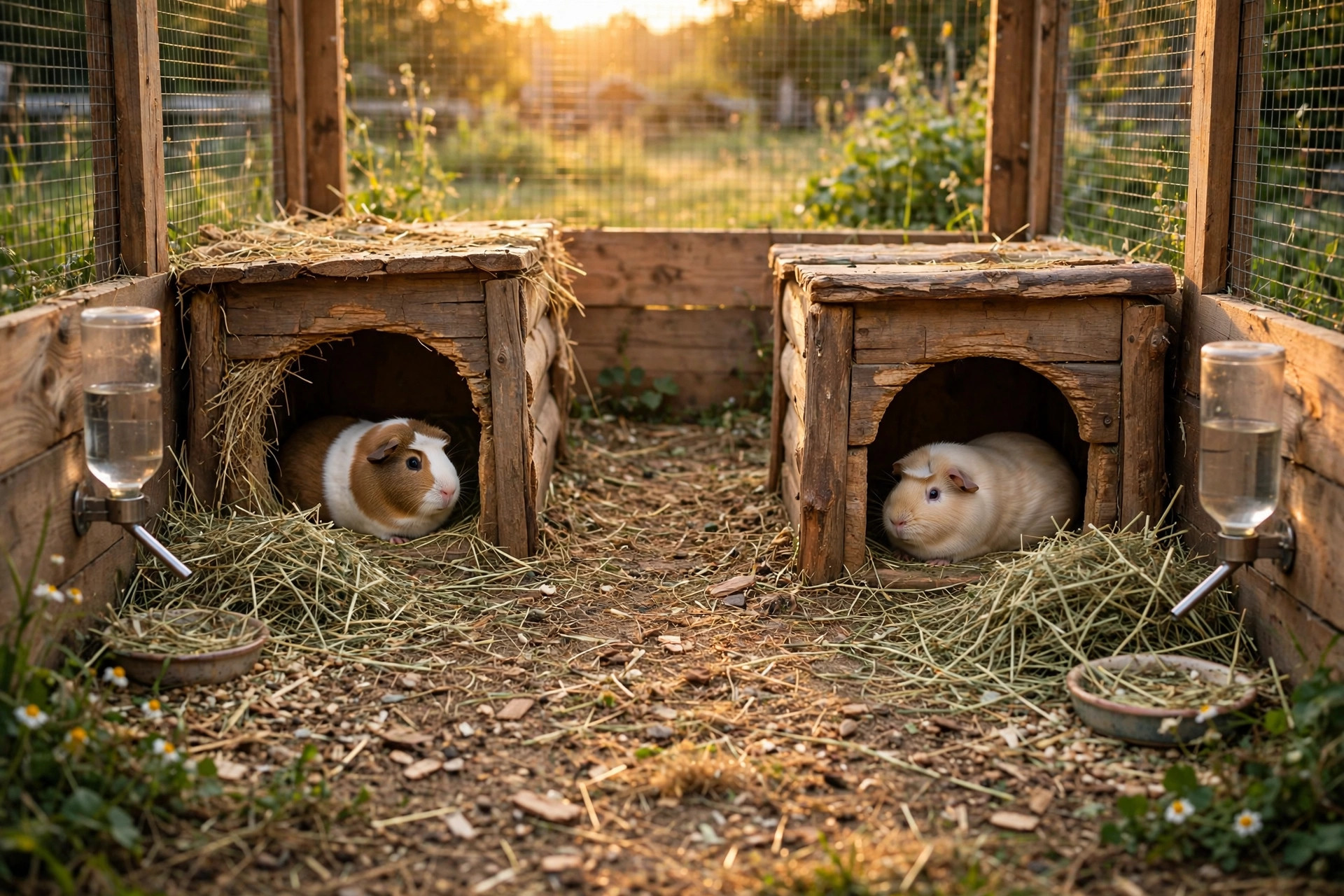
- No dead ends. A cornered pig panics. Arrange hideys so nobody can be trapped inside one.
- A towel nearby. Not for drama — for calmly draping between pigs if you need a pause, instead of grabbing.
Put a pile of hay in the middle, too. Eating together is the guinea pig version of small talk, and it gives nervous pigs something to do besides stare at each other.
The first meeting, step by step
Ready? Here’s the sequence that gives you the best shot.
- Start at a calm time of day. Not right before dinner, not when the house is loud.
- Place both pigs in the pen at the same time, at opposite ends. No favourite human holding one pig like a trophy, please.
- Step back, but stay close. Sit by the pen. Talk quietly if you like. Don’t hover with your hands in the space.
- Watch the first minutes closely. Sniffing, following, mild rumbling and mounting attempts are normal sorting-it-out behaviour. So is one pig wandering off to eat. Bored is good.
- Let it run a while if it’s calm. A short, peaceful session that ends early beats a long one that ends in a scuffle. Finish with both pigs returned to their own spaces, and repeat over the following days.
What about scent swapping beforehand? Some owners rub a cloth on each pig and swap the cloths, or swap bedding between cages for a few days before the meeting. It doesn’t hurt, and it can take the edge off the novelty. Just don’t skip the neutral-ground part because you did the cloth trick.
Reading body language without panicking
This is where new owners understandably get twitchy. A quick field guide:
Relaxed signals: eating, exploring, lying down, popcorning, soft chatter, grooming themselves. Carry on.
Sorting-it-out signals: rumbling, swaying side to side, nose-to-nose sniffing, brief chases that end on their own, one pig raising its head higher. Watch, don’t intervene yet. They’re negotiating.
Stop signals: loud teeth chattering that keeps escalating, lunging, biting that draws blood, or two pigs rolling together in a tight ball. Separate them calmly — towel between them, or thick gloves, never bare hands into a fight — and end the session. Try again another day, or take advice from a rescue experienced in bonding before you retry.
One honest note: a chase that looks dramatic often isn’t. A bite that breaks skin always is. Learn the difference and you’ll stress less.
Moving from playdates to living together
So the meetings are going well. Now what?
Don’t just drop the new pig into the resident cage. Clean the shared cage thoroughly first so it smells neutral-ish, rearrange the hideys and bowls, and make sure the space genuinely fits two — two hideys, feeding spots spread apart, room to get away from each other. A cage that was cosy for one can be a pressure cooker for two.
Then supervise the first hours at home the same way you supervised the pen. Most pairs settle into a routine quickly: one slightly bossier pig, one easier-going pig, a shared rush for the fridge-door sound. That’s community, guinea pig style.
If fights keep breaking out despite slow introductions and a proper setup, accept the Plan B: some pigs do best living side by side in adjoining cages, where they can see, smell and chat to each other through the bars without sharing space. That’s still companionship. It’s not a failure.
Finding your local guinea pig community
One underrated perk of all this? Other pig owners. Local rescues often run bonding help, small-pet social groups share what worked for them, and a good exotic-pet vet can point you toward reputable rescues if you’re adopting a companion rather than buying one. Bring questions. Guinea pig people generally love questions.
Start with your vet and nearby rescues, ask who they trust, and you’ll find your people — and probably your pig’s new best friend — pretty quickly.
Playdates are one stop on a longer road. If a new pet of any species has just joined your household, our complete first-month guide for new pets walks through the whole settling-in timeline, week by week.
Frequently asked questions
How long should a first guinea pig introduction last?
As long as it stays calm — and end it before it stops being calm. A short, peaceful first session you repeat over the following days beats one long session that ends in a scuffle. If both pigs are eating, exploring and resting, you’re doing it right.
Can male guinea pigs live together?
Yes, same-sex pairs, including males, can live together when they’re well matched and have enough space, with two of everything so neither has to compete. Introduce them on neutral ground first, and give bonded males a roomy setup — space prevents a lot of squabbles before they start.
What if my guinea pigs fight during a playdate?
Separate them calmly with a towel or thick gloves if there’s lunging, escalating teeth chattering or any bite that breaks skin, and end the session. Brief chases and rumbling are normal negotiation. Repeated real fights mean you should slow right down, retry on neutral ground another day, or get bonding advice from an experienced rescue.
Do guinea pigs really need a companion?
The RSPCA advises keeping guinea pigs in friendly pairs or small groups because they’re social animals and can get lonely on their own. If a shared cage truly doesn’t work, adjoining cages where they can see and hear each other still offer real companionship.
This article was created with AI assistance and reviewed by our editorial team before publishing.
 Cat Playdates for Indoor Cats: Safe Setups and Signs to Stop
 First Dog Park Visit? 10 Etiquette Rules to Know
 Shiba Inu for Beginners: Loyal, Foxy, Strong-Willed
Leave a Reply