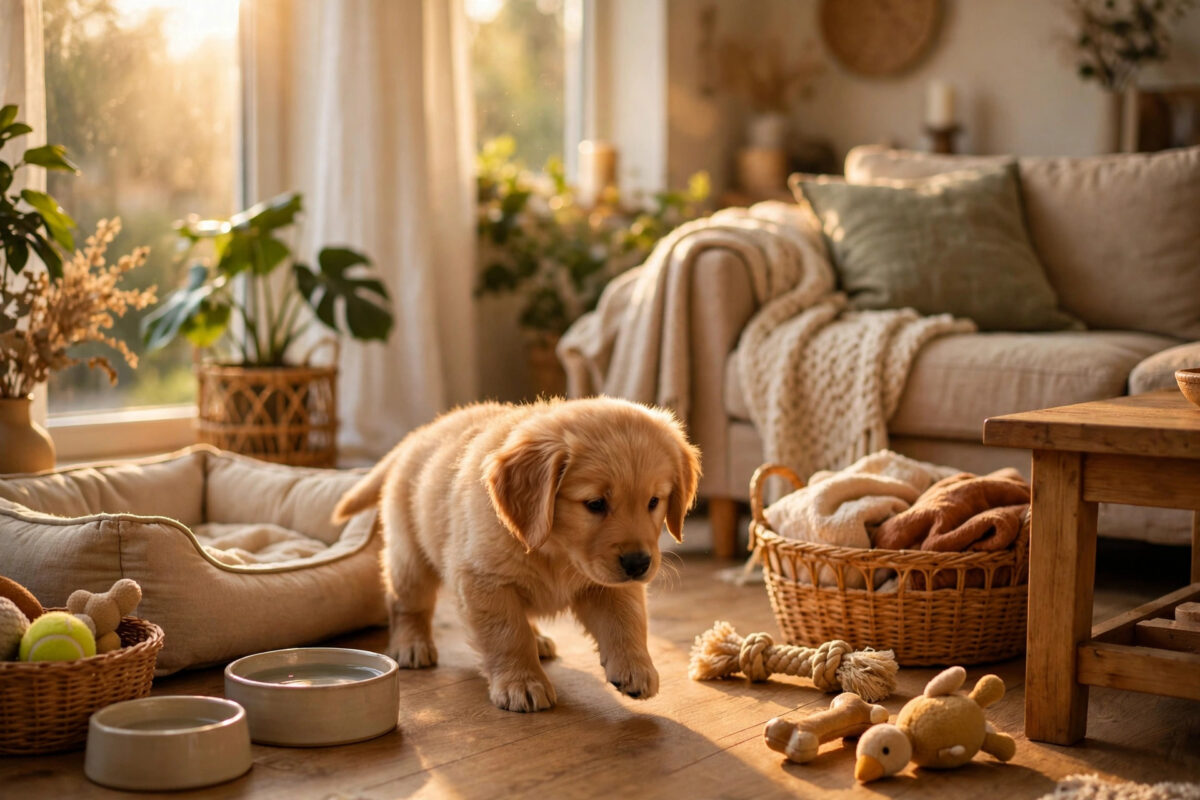
Puppy-proofing your home before adoption day means moving hazards out of reach, blocking off unsafe rooms, and setting up a small, comfortable space where your new puppy can settle in safely. Expect to spend two to three hours on one focused pass through your house — covering floors, cupboards, cables, plants, and stairs — and you will save yourself weeks of chewed shoes, emergency vet calls, and stress.
Bringing home a puppy is one of the happiest days of a pet owner’s life, and also one of the most chaotic if you walk in unprepared. Puppies explore the world with their mouths. Everything — charging cables, laundry detergent, a dropped grape — is a toy or a snack until proven otherwise. The good news is that puppy-proofing doesn’t require a renovation. It takes one careful afternoon and a short shopping list.
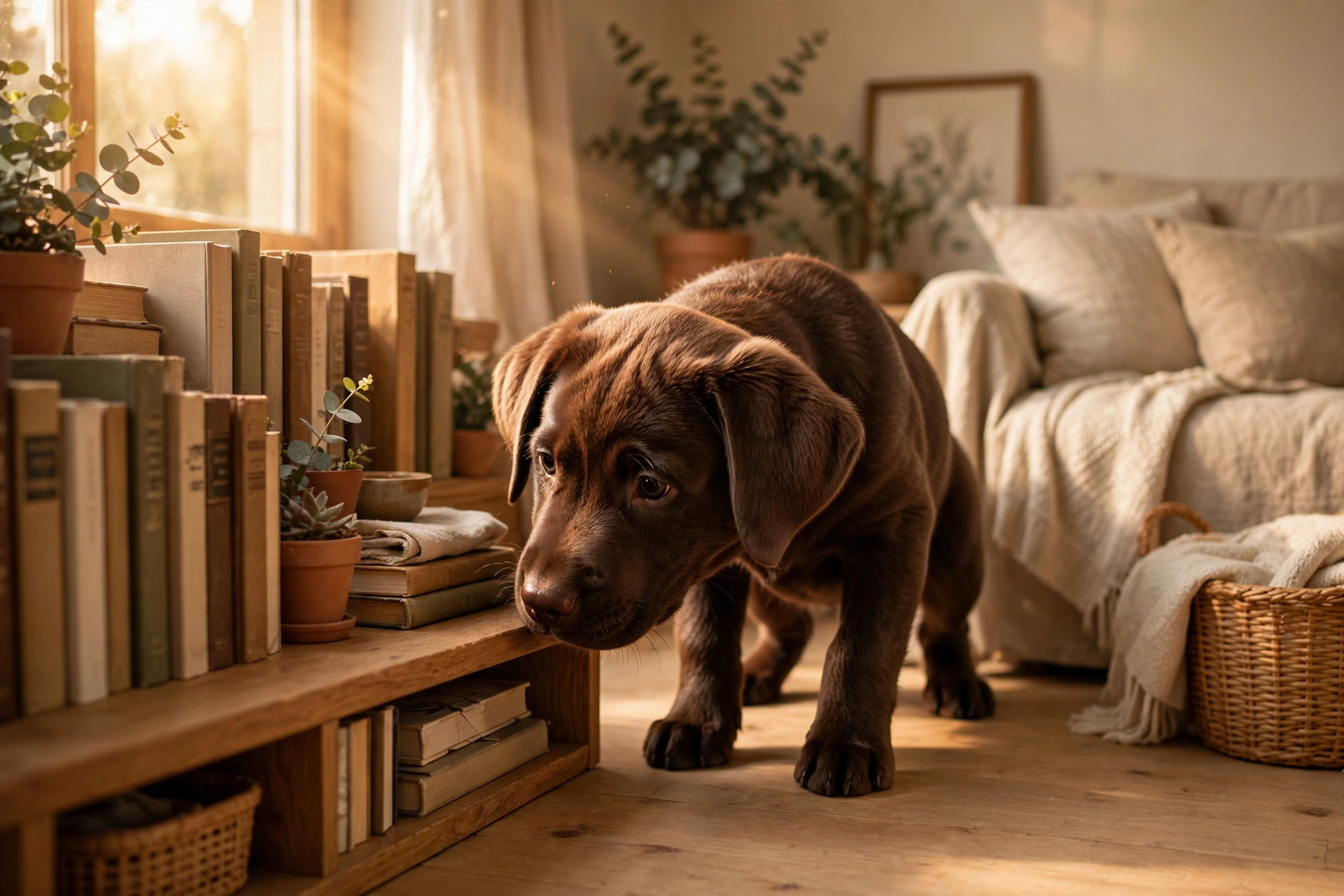
See your home from puppy height — everything at nose level is fair game.
The One-Room Rule: Start Small
The single biggest mistake new owners make is giving a puppy run of the whole house on day one. A new place is overwhelming: every smell is new, every corner is unexplored, and the pup has no idea where it is allowed to be. Confine your puppy to one room for the first week or two — usually a kitchen or a living room with easy-clean floors — and let them earn more space as they prove they can handle it.
Pick a room with a door you can close, remove everything fragile or dangerous, and set up a crate or bed in a quiet corner. This room becomes your puppy’s “home base,” which makes house training dramatically easier too, because dogs naturally avoid soiling the small space they sleep in. Baby gates work well if you don’t have a door, but make sure the gate is pressure-mounted high enough that a jumping puppy can’t clear it.
The Room-by-Room Checklist
Walk through your home at puppy height. Seriously — get down on your knees. The world looks completely different from twelve inches off the floor, and this is how you’ll spot the hazards you normally walk past.
Living room and bedrooms
Move shoes, bags, and laundry into closets. Puppies can smell your scent on footwear and worn clothes, which makes them irresistible. Secure window blind cords — puppies can tangle in looped cords, and the U.S. Consumer Product Safety Commission has flagged them as a strangulation risk for small children too. Keep remotes, coins, and small objects off low tables; anything smaller than a golf ball can become a choking hazard. If your puppy will have access to stairs, install a gate at the top and bottom. Puppies under six months are still growing, and repeated stair climbing can strain developing joints.
Kitchen
Install child-proof latches on lower cabinets, especially any holding cleaning supplies or food. A surprising number of pantry staples are dangerous for dogs: chocolate, xylitol (found in some peanut butters and sugar-free products), grapes, raisins, onions, garlic, and macadamia nuts can all cause serious poisoning. Even with latches, get in the habit of keeping food off low counters — a determined puppy on a chair will surprise you. Lock the trash can or store it under the sink behind a latch. Chicken bones and food scraps are two of the most common reasons puppies end up at the emergency vet on their first week home.
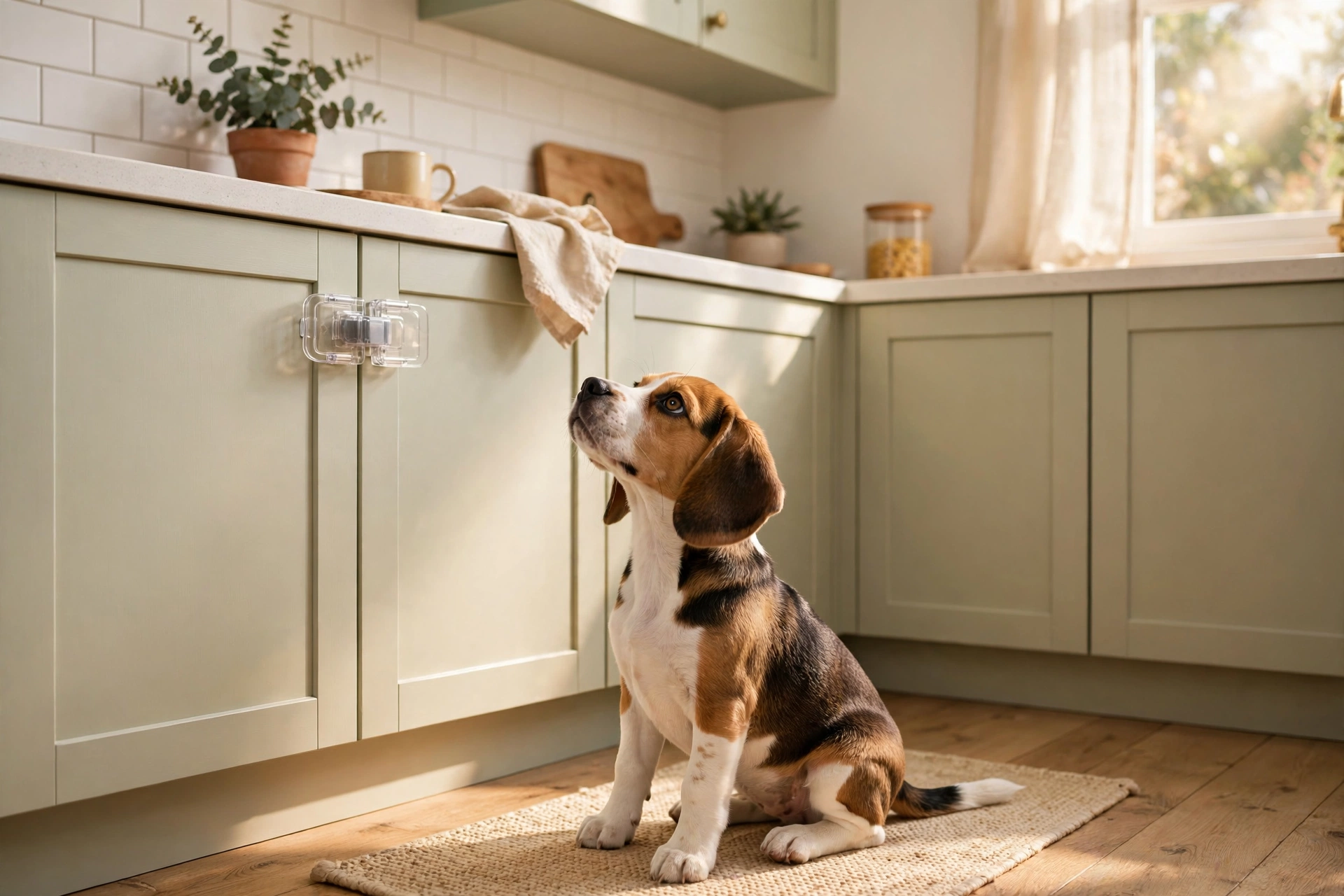
Child-proof latches on lower cabinets keep curious noses out of trouble.
🔍 Check on Eaoae
Bathroom
Keep the toilet lid closed at all times — puppies drink from toilets, and cleaning chemicals and bacterial buildup are both bad news. Store medications in a high, closed cabinet, never in a purse on the floor. A single dropped ibuprofen tablet can cause kidney failure in a small puppy. Razors, cotton swabs, and dental floss should live in closed drawers.
Garage, balcony, and yard
Antifreeze tastes sweet to dogs but a single teaspoon can be lethal — store it locked away and wipe up any driveway spills immediately. Rat poison and slug bait go in sealed containers on high shelves. If you have a balcony, check that gaps between railings are too narrow for a puppy to squeeze through; a good rule is nothing wider than four inches. In the yard, check your plants: lilies, sago palm, azaleas, and tulips are all toxic to dogs, so fence them off or remove them before adoption day.
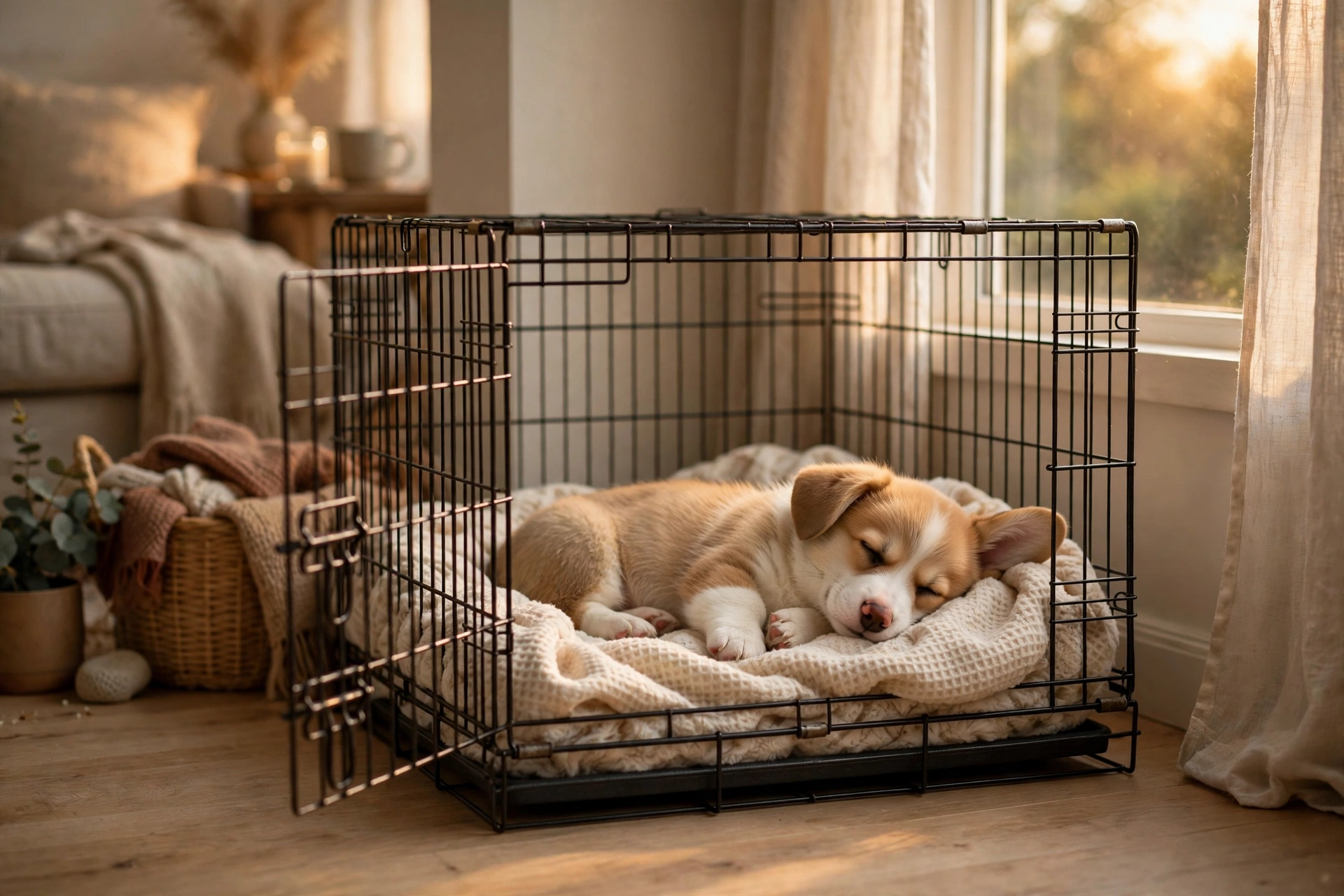
A crate set up as a cozy den — not a punishment box — gives your puppy a safe retreat.
The Shopping List: What to Have Ready
You don’t need to buy the entire pet store. Here is what actually matters on day one:
- Crate or enclosed bed sized so the puppy can stand, turn, and lie down — not much bigger, or they’ll use one end as a bathroom.
- Two bowls (water and food), ideally stainless steel or ceramic. Plastic bowls scratch, harbor bacteria, and some puppies chew them.
- Puppy food — buy the same brand the shelter or breeder was feeding. Sudden food changes cause stomach upset; transition to your preferred food over 7–10 days.
- Chew toys in two textures — one soft plush, one durable rubber like a Kong. Rotate them so they stay interesting.
- Baby gates or a playpen for the home-base setup.
- Enzymatic cleaner for accidents. Regular cleaners mask the smell for you but not for the puppy; enzymatic cleaners actually break down the proteins that draw them back to the same spot.
Set Up the Daily Routine Before the Puppy Arrives
Puppies thrive on predictability. A puppy under 12 weeks old needs to go outside roughly every two hours during the day, plus right after meals, naps, and play sessions. Decide now who takes the morning shift, where the potty spot is, and what time meals happen — 7 a.m. and 5 p.m. works well for most households. Write it on the fridge if you live with family or roommates. Consistency from day one prevents half your house-training problems.
Also plan for alone time. Even if someone works from home, a puppy needs to learn that being alone in the crate for short periods is safe and normal. Start with 10–15 minutes on day two or three while you’re in the next room, and build up gradually. A puppy that never practices being alone becomes an adult dog with separation anxiety.
FAQ
How long does puppy-proofing take?
One focused session of two to three hours covers a typical apartment or house. Add another hour if you have a yard. Revisit the checklist at the six-month mark, when your puppy is bigger, stronger, and can reach shelves and counters they couldn’t before.
What’s the most commonly missed hazard?
Electrical cords. Puppies chew them, and a chewed live cord can cause burns or electrocution. Run cables through cord covers or lift them behind furniture before adoption day — it’s the fix people always say they wish they’d done sooner.
Do I need to puppy-proof if I’m adopting an adult dog?
Yes, with a lighter touch. Adult rescues are less mouthy but can still counter-surf, chew out of anxiety, or dig at doors. Do the same walk-through, but you can skip the crate-if-you-prefer and focus on food security, trash access, and escape routes.
When can my puppy have free roam of the house?
Most puppies earn unsupervised access to one additional room at a time between four and six months, once they’re reliably house-trained and past the worst of the chewing phase. Full free roam usually waits until 10–12 months. There’s no prize for rushing it.
Should I remove all my houseplants?
Not all — just the toxic ones. Move anything on the ASPCA’s toxic-plant list out of reach or rehome it, and keep the safe ones (spider plants, Boston ferns, parlor palms) where they are. Hanging planters are your friend during the puppy months.
Proofing is day one of a bigger plan. Our complete first-month guide for new pets lays out all four weeks — proofing, first supplies, the vet visit, and the routines that follow.
This article was created with AI assistance and reviewed by our editorial team before publishing.
 Syrian Hamster Care Guide: Home, Diet and Handling
 Bringing Home a New Pet: The Complete First-Month Guide
 First Rabbit Care Guide: Housing, Hay and Daily Routines
Leave a Reply