
Good rabbit care isn’t complicated, but it is specific. Your rabbit needs unlimited grass hay, a pen big enough to stretch, hop and stand up in, fresh greens every day, and a calm daily routine. Get those four things right in week one and most other problems never show up.
Start with space, not a tiny hutch
Here’s the mistake a lot of new owners make. They buy the cage first, then try to fit the rabbit’s life around it.
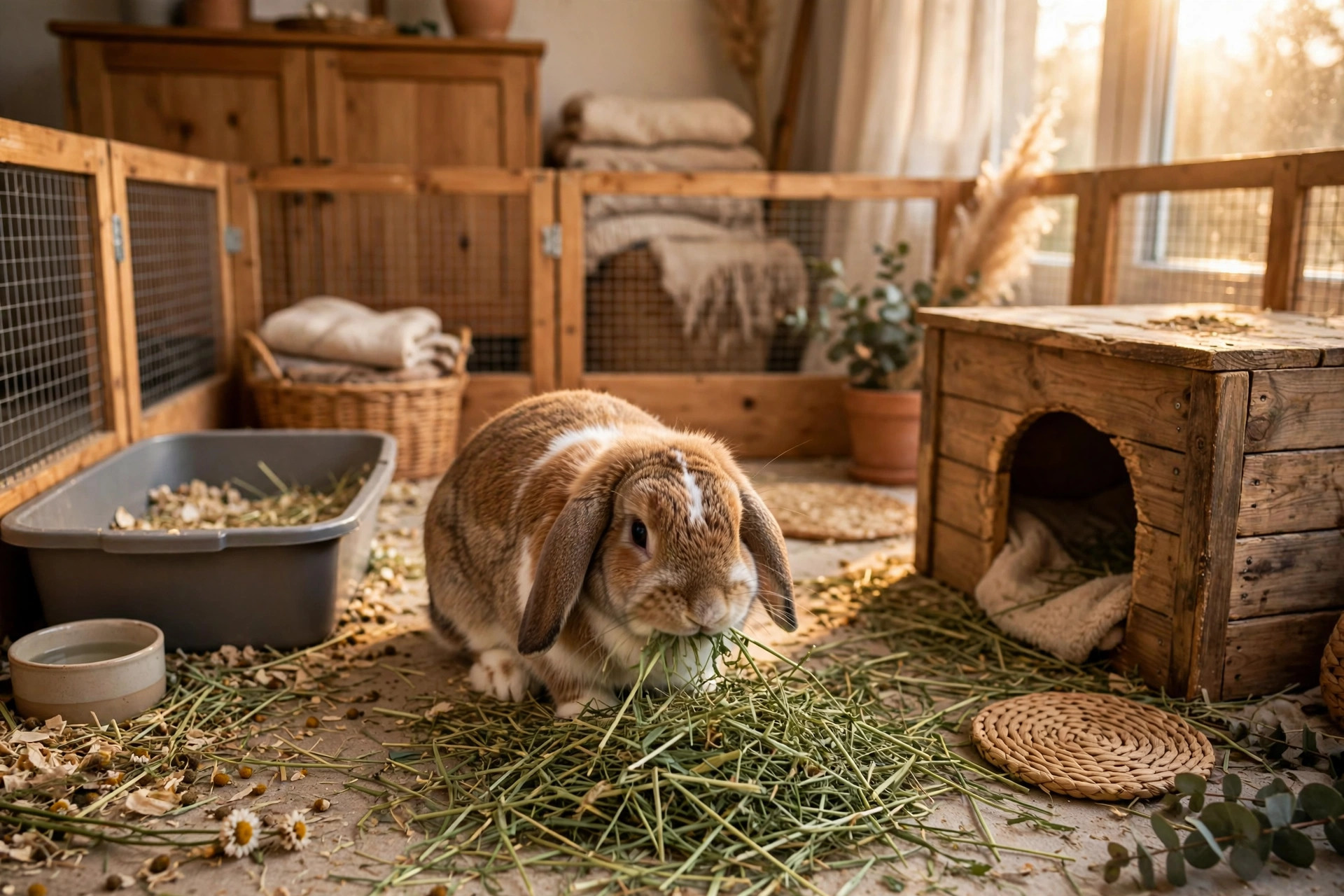
Flip that order. The Rabbit Welfare Association & Fund recommends a minimum enclosure of about 3 metres by 2 metres, with enough height for a rabbit to stand upright on its back legs. That’s roughly 10 feet by 6.5 feet. A large exercise pen, a bunny-proofed room corner, or a pen joined to a roomy shelter all work fine.
Flooring matters more than you’d guess. Wire floors hurt feet. Go solid, then add a washable rug or low-pile mat for grip. Rabbits slip on shiny floors, and a rabbit that doesn’t trust the floor won’t move much.
Inside the pen, keep it simple:
- A hide house with two exits, so your rabbit never feels cornered
- A large litter tray filled with paper-based litter and a pile of hay
- A heavy ceramic water bowl — most rabbits drink more from a bowl than a bottle
- A cardboard box to shred, because something will get chewed either way
Rabbits are most active at dawn and dusk. That’s normal. Don’t expect a busy pet at midday, and don’t drag a sleeping rabbit out for playtime.
Hay is the whole deal
If you remember one sentence from this guide, make it this one: hay isn’t a snack, it’s the main course.
The RSPCA advises that good-quality hay and grass should make up the bulk of a rabbit’s diet, with an adult eating at least its own body size in hay every day. Hay does two jobs at once. It keeps the gut moving, and it wears down teeth that never stop growing.
Timothy hay suits most adult rabbits. Meadow hay adds variety. Alfalfa is richer, so it’s usually kept for young, pregnant or underweight rabbits — ask your vet before you make it a daily habit for a healthy adult.
Store hay somewhere dry. If it smells dusty or looks grey, don’t feed it. Fresh hay smells sweet, almost like a summer field, and your rabbit should dive into a new pile without hesitation.
Greens, pellets and the treat trap
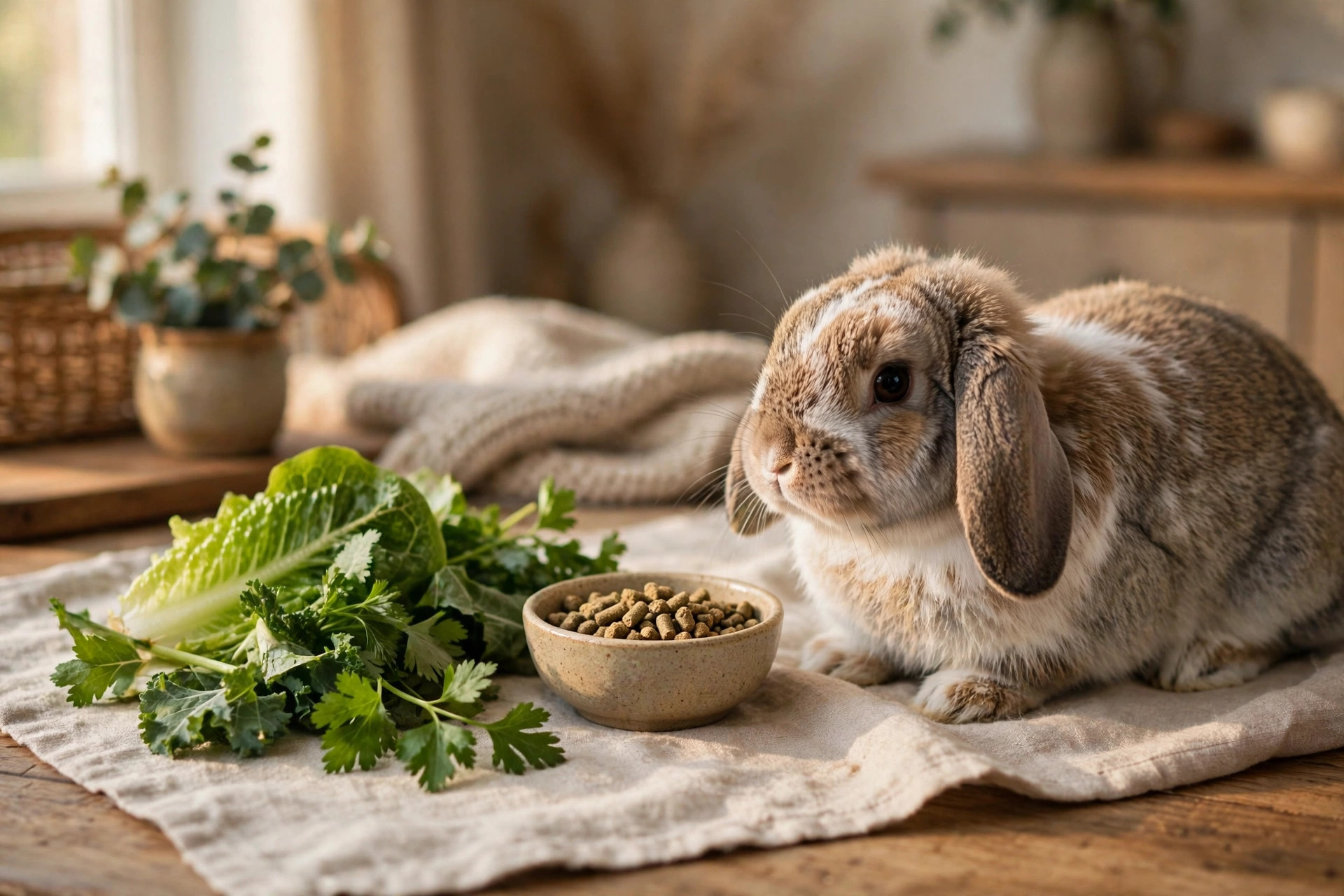
On top of hay, offer a handful of fresh leafy greens each day. The RSPCA lists options such as kale, broccoli, parsley and mint as suitable greens for rabbits. Rotate two or three kinds rather than serving the same leaf for a month. Wash them, shake them dry, and introduce anything new in small amounts over a few days.
Pellets? Keep them small. An egg-cup-sized measure a day is the guide the Rabbit Welfare Association & Fund gives for an average adult rabbit. Bowls heaped with pellets are a fast route to a rabbit that ignores its hay — and that’s where teeth and tummy trouble start.
Fruit is dessert, not dinner. A thumbnail-sized piece of apple or a couple of blueberries once or twice a week is plenty. Skip biscuits, yoghurt drops and brightly coloured treats sold for rabbits. They look fun. Your rabbit’s gut won’t agree.
One safety note, because it comes up a lot: not every plant or kitchen scrap is rabbit-safe. If you’re unsure about a food, check before you share it, not after.
A daily routine your rabbit can predict
Rabbits relax when life is predictable. You don’t need a stopwatch. You do need a rhythm.
Morning. Top up the hay, refresh the water, spot-clean the litter tray, and offer the day’s greens. Watch your rabbit eat for a minute. A rabbit that rushes to breakfast is telling you something good.
Evening. This is playtime. Open the pen for supervised roaming, refresh the hay again, and sit on the floor at your rabbit’s level. Let your rabbit come to you. Chasing and grabbing teach the opposite lesson from the one you want.
Weekly. Do a full litter and pen clean, check nails, and run your hands gently over your rabbit’s body. You’re looking for lumps, sore spots, a messy bottom, or anything that wasn’t there last week.
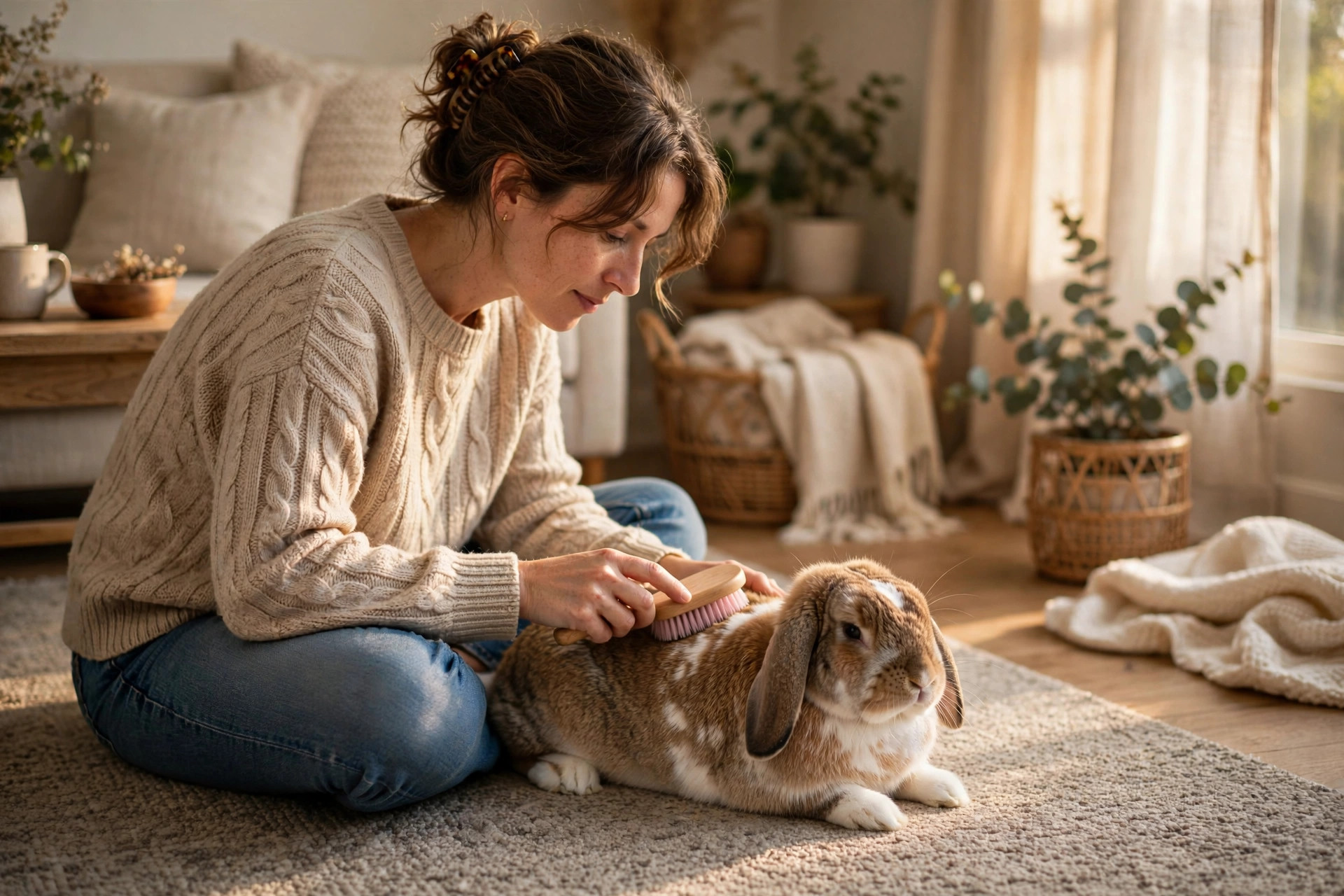
Holland Lops and other longish-coated rabbits need a gentle brush once or twice a week, more when they’re moulting. Keep sessions short. Five calm minutes beat twenty stressful ones, every time.
Bunny-proof the room before free roaming
A rabbit explores with its teeth. Cables, skirting boards and rug corners are all fair game in rabbit logic, so plan for it.
Cover cables with split-loom tubing or move them off the floor. Block gaps behind furniture — a rabbit can squeeze into spaces that look far too small. Lift houseplants out of reach, and put a cheap sacrificial cardboard box in the play area so the chewing lands somewhere harmless.
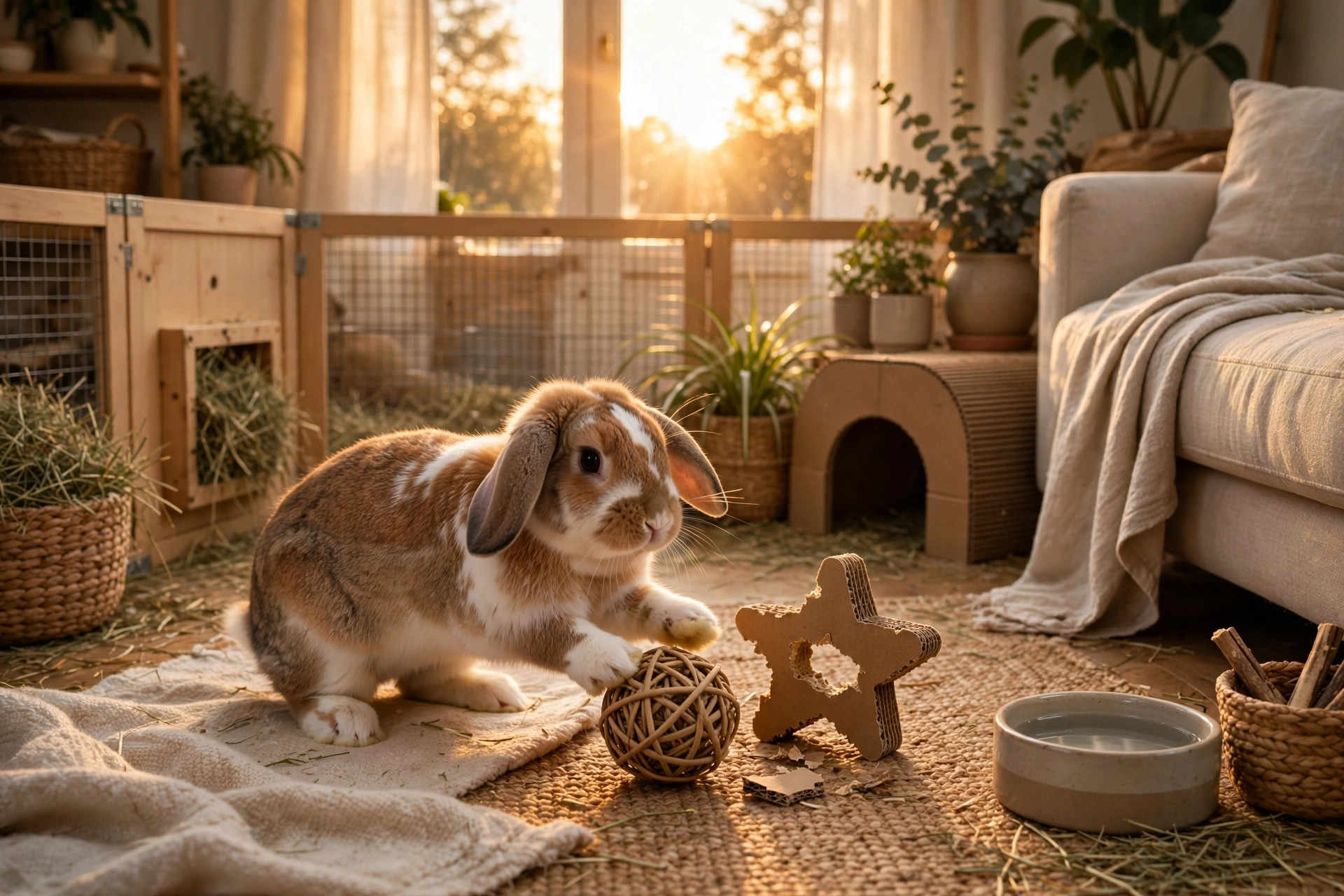
Toys don’t need to be fancy. A cardboard castle, a willow ball, toilet-roll tubes stuffed with hay — that’s a good afternoon for a rabbit. Rotate toys every few days and the old ones feel new again.
Health checks and finding the right vet
Find a vet who sees rabbits regularly, ideally before you need one in a hurry. The Rabbit Welfare Association & Fund keeps a list of rabbit-friendly vet practices, and your local practice can tell you honestly whether rabbits are a big part of its work.
Learn two warning signs by heart. First, a rabbit that stops eating or produces far fewer droppings needs veterinary help the same day — the RSPCA warns that a rabbit’s gut must keep moving, and stasis can become serious quickly. Second, flystrike in warm weather: check your rabbit’s bottom daily in summer, keep the pen clean, and treat any messy fur as urgent.
Vaccinations, neutering and dental checks all belong in a first vet chat. Ask what’s recommended where you live, get the costs in writing, and put the dates in your calendar. Boring? Yes. Cheaper and kinder than an emergency? Also yes.
The first week, honestly
Don’t expect instant cuddles. Many rabbits spend day one hiding, day two watching you, and most of week one deciding whether you’re safe.
Sit nearby and read a book. Let your rabbit sniff your hand, then leave it alone. Offer a green from your fingers, not a grab. Trust builds in these small, dull moments — and once a rabbit trusts you, it shows. The first flop onto a side, the first nose-bump against your ankle: you’ll know.
So take it slow. Hay topped up, pen roomy, routine steady. That’s rabbit care, done properly.
🐾 Not sure if a snack or plant is safe for your rabbit? Eaoae’s toxic foods list for rabbits is a quick reference checker — look it up before you share, and remember it’s a reference tool, not a substitute for your vet.
The first month sets the pattern for everything after it. Our complete first-month guide for new pets covers the settling-in timeline — decompression, routine, and the first vet visit — that applies across species, rabbits included.
Frequently asked questions
How much hay should a rabbit eat each day?
At least its own body size in hay every day, according to RSPCA guidance. Keep hay available around the clock, in the litter tray and in a rack or pile, and refresh it daily so it stays fresh and appealing.
Can a rabbit live indoors?
Yes. Indoor rabbits often live calmer, safer lives away from predators and bad weather. Give them a roomy pen, daily supervised roaming in a bunny-proofed space, and a quiet corner to retreat to during the day.
Do rabbits need a companion?
Rabbits are social animals, and the Rabbit Welfare Association & Fund recommends keeping them in compatible, neutered pairs where possible. If you start with one rabbit, talk to your vet and a reputable rescue or breeder about bonding once your first rabbit has settled in.
What should a first rabbit vet visit cover?
A general health and teeth check, vaccination advice for your area, neutering plans, diet, and what to watch for at home. Bring your questions in a list — a good rabbit vet won’t mind a bit.
This article was created with AI assistance and reviewed by our editorial team before publishing.
 Syrian Hamster Care Guide: Home, Diet and Handling
 Bringing Home a New Pet: The Complete First-Month Guide
 The First 30 Days with a New Kitten: A Week-by-Week Guide
Leave a Reply