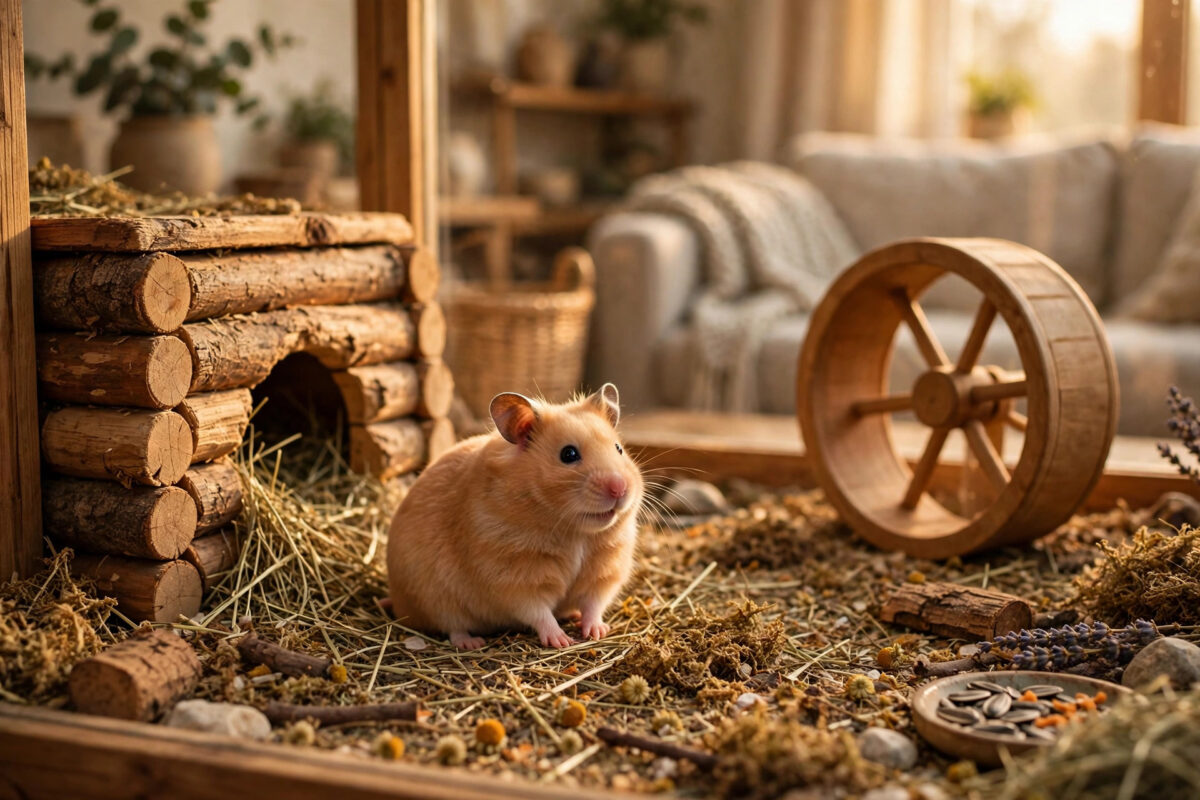
A Syrian hamster makes a great first small pet if you set up the home before the hamster arrives, feed a plain pellet-based diet with tiny fresh extras, and handle gently for short sessions once your hamster has had a few quiet days to settle. Rush any of those three, and a sweet hamster turns shy fast.

What a Syrian hamster is actually like
Syrians are the big, teddy-bear hamsters you see in most pet shops. They’re solitary. One hamster, one home, no roommate — adult Syrians fight hard if you house them together, and it isn’t a rare risk, it’s the normal outcome.
They’re also night owls. Yours will probably sleep through your morning, potter about in the evening, and run for hours after you’ve gone to bed. If you want a pet who’s awake when the kids get home from school, that rhythm works fine. If you want a daytime companion, it really doesn’t.
Setting up the home, step by step
Buy the enclosure first, everything else second. Here’s the order that saves you money and stress:
- Pick the biggest floor you can fit. Hamsters roam. Floor space matters far more than height or fancy tubes, so a long, low enclosure beats a tall, narrow cage.
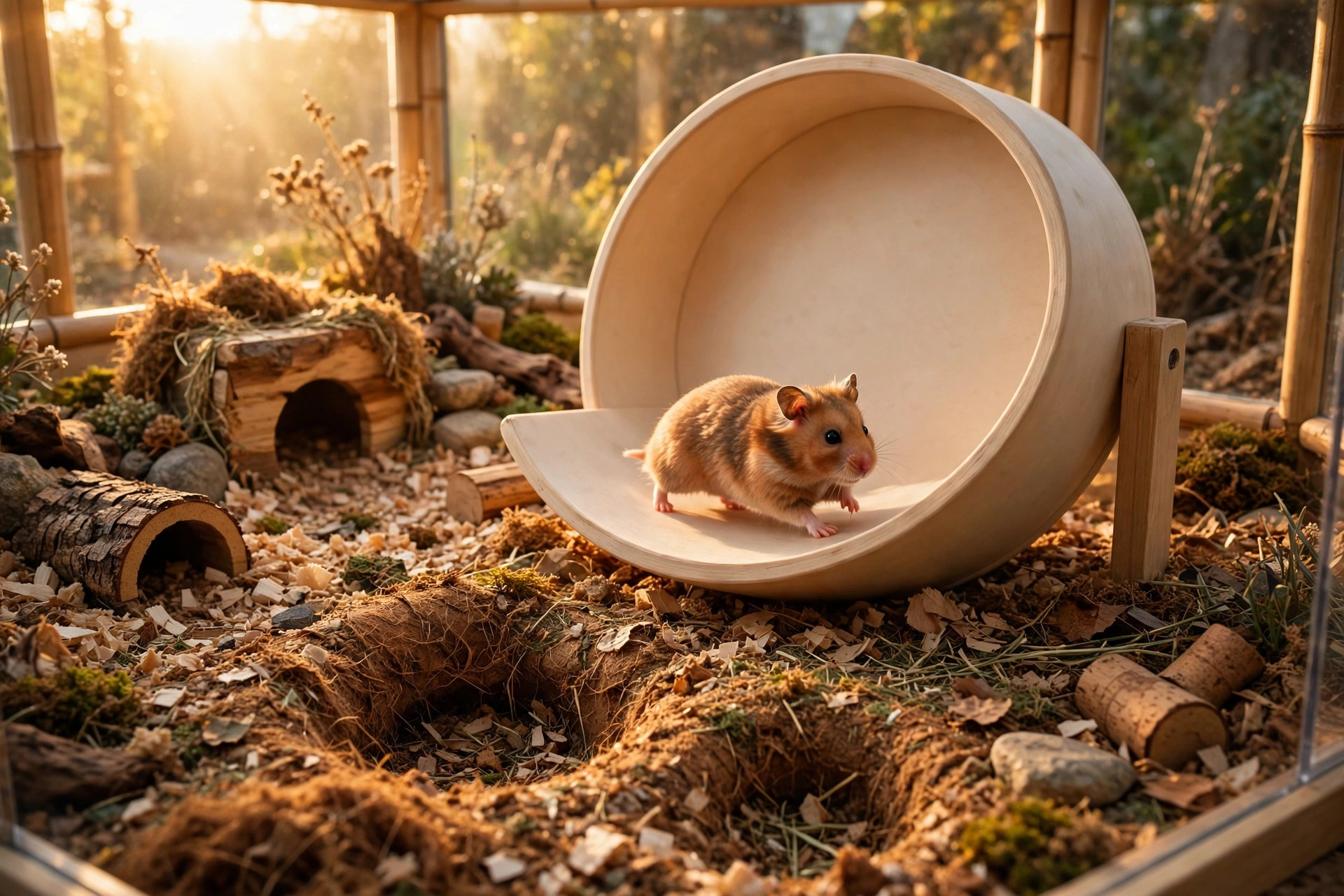
- Add deep bedding. Syrians dig. Give them a thick layer of paper-based or aspen bedding at one end so they can burrow and build a nest that feels like theirs.
- One solid wheel. It should have a smooth, solid running surface — no rungs, no mesh — and be big enough that your hamster runs with a fairly straight back.
- A hideout and a nest corner. A simple wooden or ceramic house gives them somewhere dark to sleep. They’ll drag bedding inside and make it home within a day.
- Food bowl, water bottle, chew sticks. A heavy ceramic bowl won’t tip. Check the water bottle daily; a stuck ball valve is an easy thing to miss.
What goes in the food bowl
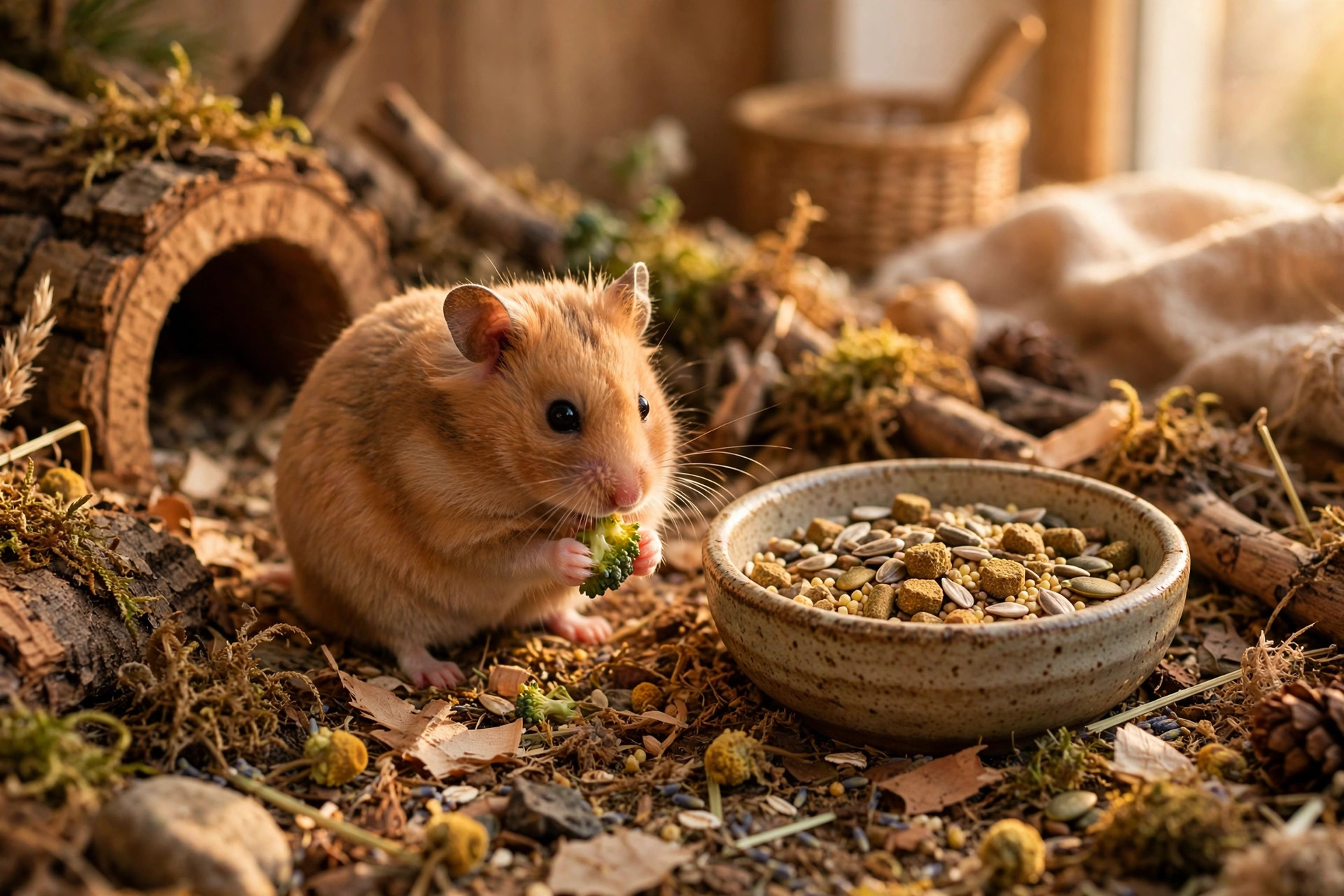
Keep it boring, on purpose. A good-quality hamster pellet or lab block as the base stops picky eating — with seed mixes, plenty of hamsters eat the tasty bits and leave the rest, like a kid picking marshmallows out of cereal.
Fresh extras are a garnish, not a meal. A thumbnail-sized piece of broccoli, carrot, or apple a few times a week is plenty. Wash it, keep it small, and take out anything uneaten the next day before it rots in a food stash.
Skip sugary treats marketed for hamsters. Yogurt drops and honey sticks sound fun, but they’re basically candy, and Syrians put on weight quickly. A plain sunflower seed handed over during handling does the same bonding job.
Handling without the drama
Wait a few days first. New home, new smells, new sounds — let your hamster sleep, eat, and explore before hands enter the picture. Then start small.
Offer a seed from flat fingers and let the hamster come to you. Scoop from underneath with cupped hands rather than grabbing from above; from a hamster’s point of view, a hand dropping down looks a lot like a predator. Keep sessions to a few minutes at first, low over a lap or a bed, so a wriggle never means a long fall.
Never wake a sleeping hamster to play. A startled, half-asleep Syrian is the one most likely to bite, and honestly? You’d be grumpy too.
Playtime outside the enclosure
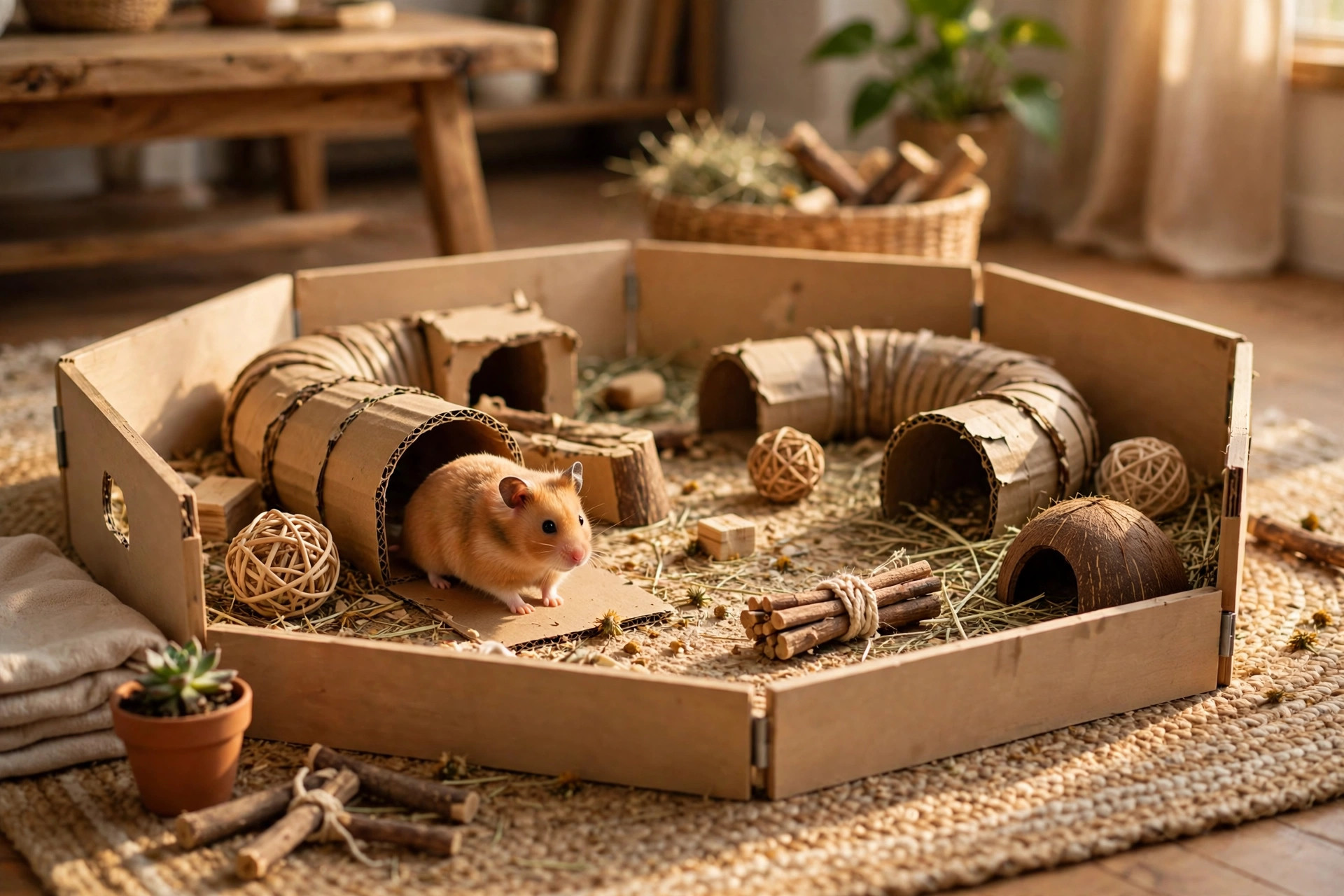
A playpen session a few evenings a week gives your hamster new smells and space to explore. Use a fenced area or a dry bathtub lined with a towel. Add cardboard tunnels, toilet-roll tubes, and chew toys. Block gaps behind furniture before you start — a hamster can pour itself through a space you’d swear was too small.
Skip the exercise ball if you can. Plenty of owners use them, but a playpen gives the same exercise with better air, no banged doorframes, and a hamster who can choose to stop.
Cleaning, without wrecking the nest
Here’s the bit beginners usually get backwards. A hamster’s home shouldn’t smell of nothing. That nest, and the little food stash buried near it, are how your hamster knows where home is. Strip everything out weekly and you’ll have a stressed animal rebuilding from scratch, over and over.
Spot-clean instead. Pick out wet bedding and droppings every couple of days — it takes a minute. Every few weeks, replace most of the bedding but leave a handful of the old, dry nest material behind so the place still smells familiar. Wash the enclosure with warm water and a plain, unscented clean; strong-smelling sprays in a small animal’s whole world are a bad idea.
Food stashes need a light touch too. Check for anything fresh that’s gone soft, quietly remove it, and leave the dry stores alone. Yes, it feels like stealing. It kind of is. Do it while your hamster is out in the playpen.
Small signs worth noticing early
You don’t need to hover. Just learn what normal looks like for your hamster — eating in the evening, running at night, cheeks stuffed after dinner — and notice changes. Eating much less, a wet or messy tail end, sneezing fits, or a hamster who’s suddenly awake and restless all day are all reasons to call a vet who sees small animals.
One more quiet check: teeth and nails. Hamsters’ teeth grow their whole lives, which is why the chew sticks matter. If eating slows down or drooling starts, that’s a vet visit, not a wait-and-see. Catching small-pet problems early makes a real difference, because an animal this size can go downhill fast.
Your first-week checklist
- ☐ Enclosure set up, bedding deep at one end, wheel and hideout in place
- ☐ Water bottle checked and dripping freely
- ☐ Pellet food in a heavy ceramic bowl; seed mix only as a small extra
- ☐ Days 1–3: quiet only — food, water, no handling
- ☐ Day 4 onward: hand-feed one seed, let the hamster choose to approach
- ☐ First handling: cupped hands, low height, a few minutes
- ☐ Playpen ready with tunnels, gaps blocked, other pets out of the room
That’s the whole recipe, really. Space to dig, plain food, patience with handling. Get those right and a Syrian hamster stops being a shy pet-shop animal and becomes the character who greets you — well, at 9 p.m. — every single night.
This article was created with AI assistance and reviewed by our editorial team before publishing.
 Bringing Home a New Pet: The Complete First-Month Guide
 First Rabbit Care Guide: Housing, Hay and Daily Routines
 The First 30 Days with a New Kitten: A Week-by-Week Guide
Leave a Reply