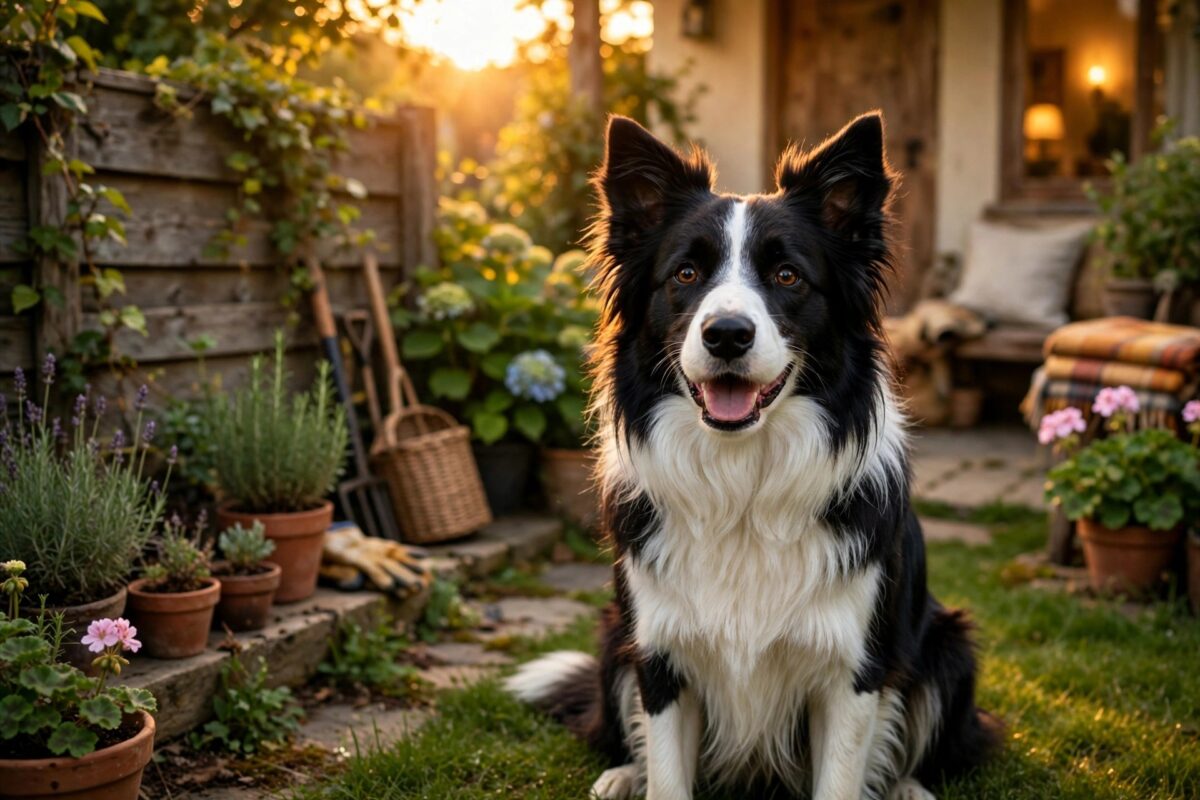
A Border Collie can suit a beginner, but only a beginner who wants a busy dog. Border Collies learn fast, watch everything, and get bored in a quiet, empty routine. Give yours daily training, proper exercise, and thinking games, and you get a dog who learns almost anything you teach with patience.
That is the honest trade. People fall for the breed in videos. A Collie flies through an agility course, stares into its owner’s face like it’s reading a newspaper, and seems to know fifty words. All of that can be real. None of it is automatic.
Behind every calm, clever Border Collie is a person who built a routine and stuck to it. Not a perfect person. Just a consistent one.
Is a Border Collie right for a first-time owner?
It depends on the beginner. If you love being outdoors, you enjoy teaching things, and your idea of a good evening includes a walk and a training game, you’re a plausible match. If you want a dog who naps through a sedentary week and asks for little, you’re not. That isn’t a character flaw. It’s a mismatch, and mismatches are how good dogs end up labelled difficult.
The American Kennel Club describes the Border Collie as a highly energetic, exceptionally smart working breed, and that pairing is the whole story. Energy alone is manageable. Brains alone are manageable. Together, they mean a dog who will invent a job if you don’t provide one.
Invented jobs are rarely ones you like. Herding the children. Chasing bikes. Reorganising the garden. Barking at every passer-by from the window, with great dedication.
What their energy actually looks like
Forget the idea of tiring a Collie out once and enjoying a quiet dog for two days. It doesn’t work like that. A fit adult will happily go again tomorrow, and the day after.
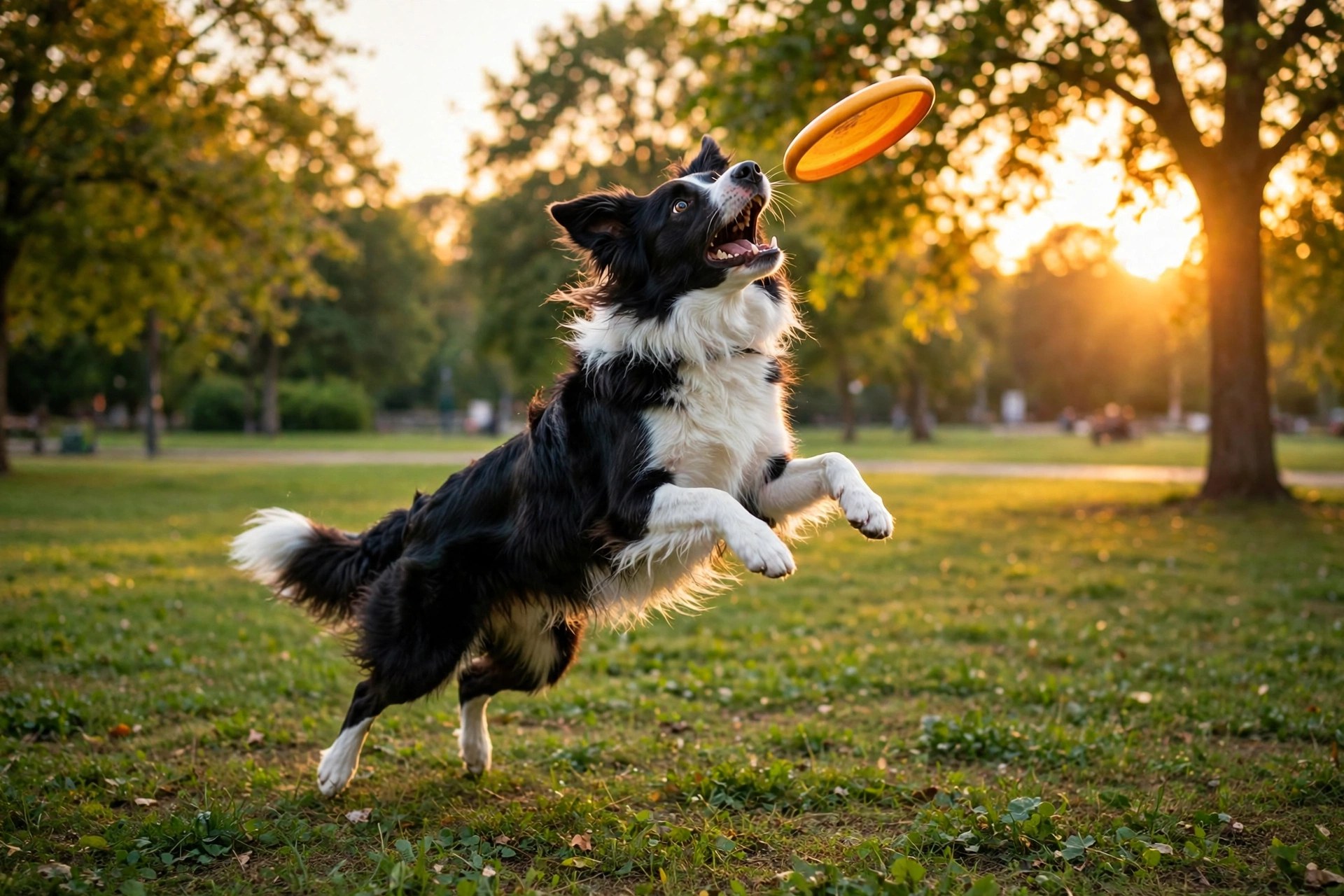
Plan your days around two kinds of activity. Physical exercise is the obvious half: walks with time to sniff, off-lead play where it’s safe and legal, fetch in short bursts, and hill walks on weekends if that’s your thing. Sniffing counts, by the way. A slow walk where your dog reads the neighbourhood nose-first can settle a dog in a way a march around the block never will.
The second half is mental work, and beginners miss it. We’ll come back to that, because it changes everything.
Training a Border Collie without losing your mind
Good news first. You won’t struggle to get this breed’s attention. Collies tend to lock onto their person and try hard to work out what pays. Your job is to make the right answer easy and the wrong answer boring.
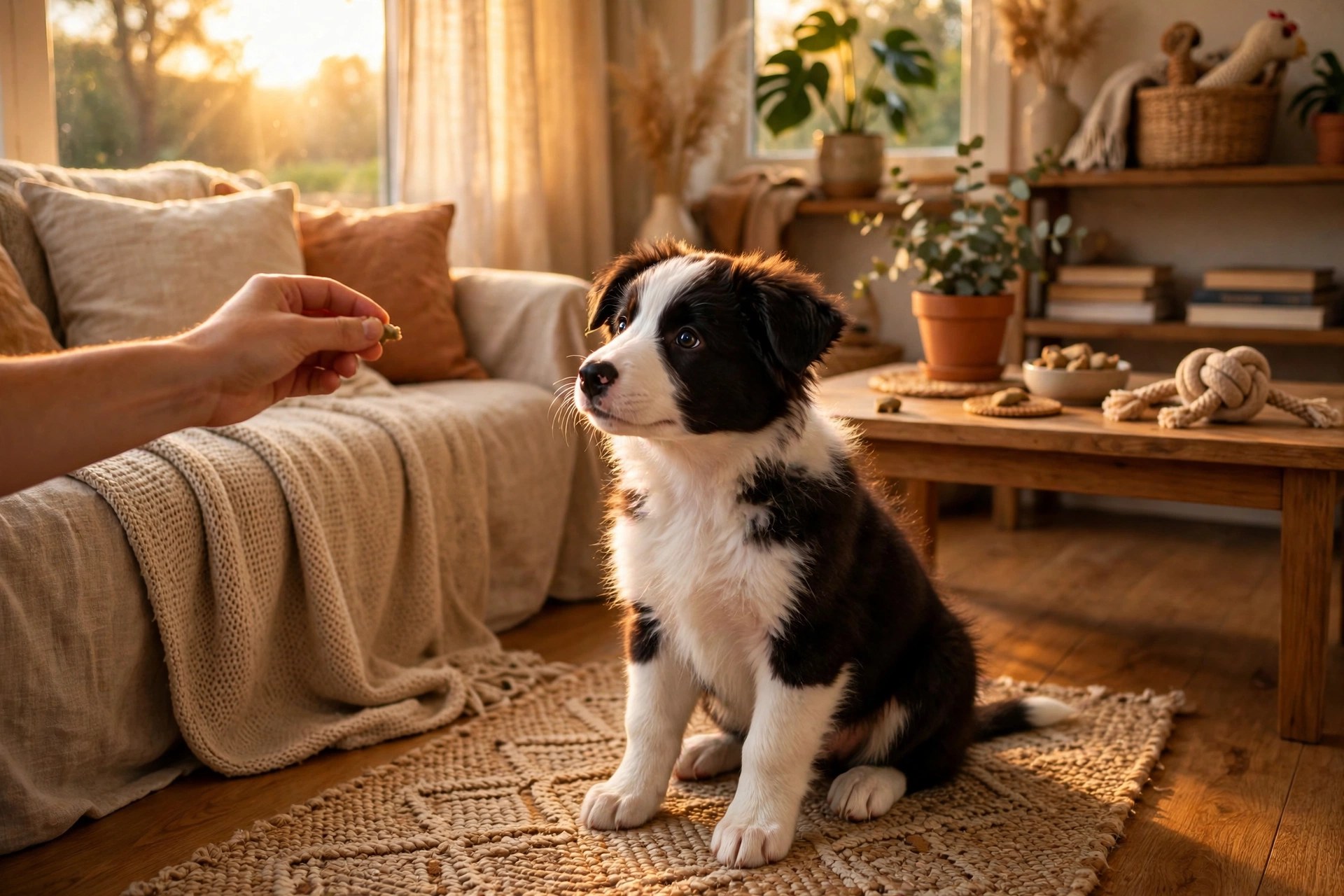
Keep sessions short. Five minutes of focused practice, several times a day, beats one long drill where you both get frustrated. End while it’s still fun. A puppy who leaves a session wanting more will run to you for the next one.
The first cues worth teaching
- Name games. Say the name, reward eye contact. You’re building a dog who checks in with you instead of scanning for trouble.
- Recall. Start indoors, then in a garden, then on a long line. Pay with something genuinely good, not the boring biscuit from the bottom of your pocket.
- Settle. Reward calm behaviour on a mat. This cue matters more than any trick, because a Collie who can switch off is a Collie you can live with.
- Leave it. Useful for dropped food, dead things on walks, and the neighbour’s cat. Teach it early, in tiny steps.
One warning. Collies read body language beautifully, and they notice inconsistency just as fast. If the dog is allowed on the sofa on Saturday and scolded for it on Monday, you won’t get defiance. You’ll get a confused dog who tests the rule every time, just in case today is a sofa day.
Mental work: the part beginners miss
A tired body with a fresh brain is still a restless dog. So feed the brain on purpose.
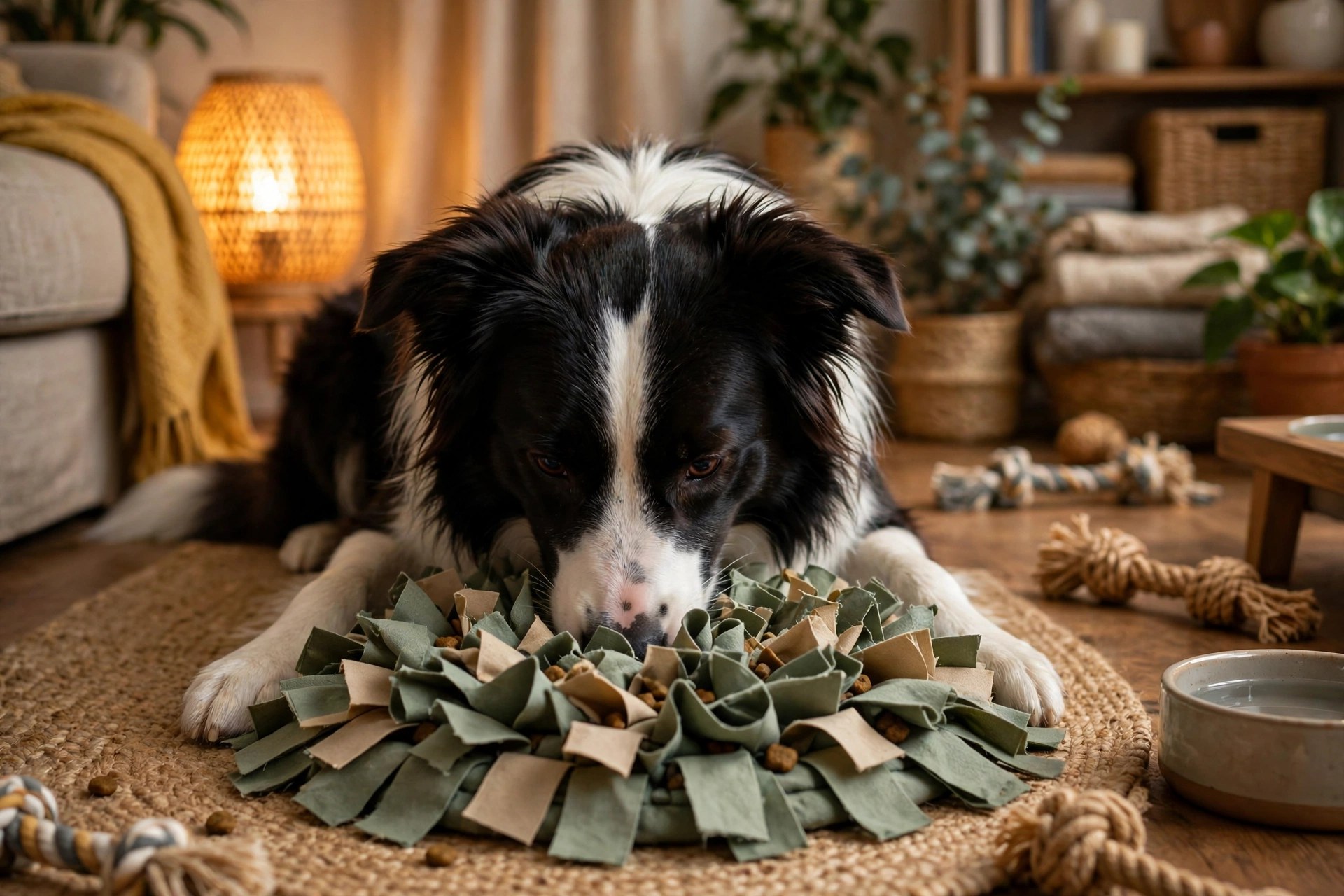
Scatter a handful of dinner in the grass and let your dog hunt for it. Hide a favourite toy behind a chair and send them to find it. Use a snuffle mat or a muffin tin with balls over the cups. Rotate puzzle feeders instead of buying new ones every month; a forgotten toy comes back feeling new after a few weeks in a cupboard.
Trick training counts too, and it’s not frivolous. Teaching a spin, a paw, or carrying a toy to a basket uses the same focus you’d want on a walk. Herding-breed games, beginner agility, and scent work all suit this breed well, and local classes can help you start safely.
Feeding, coat and health basics
Feed for the dog in front of you. An active young Collie burns through a working day differently from a calmer older one, so follow the food’s guide as a starting point, then adjust by body condition. You should feel ribs under a light layer, not see them from across the room. Your vet can show you a hands-on body condition check at a routine visit, and it’s worth asking.
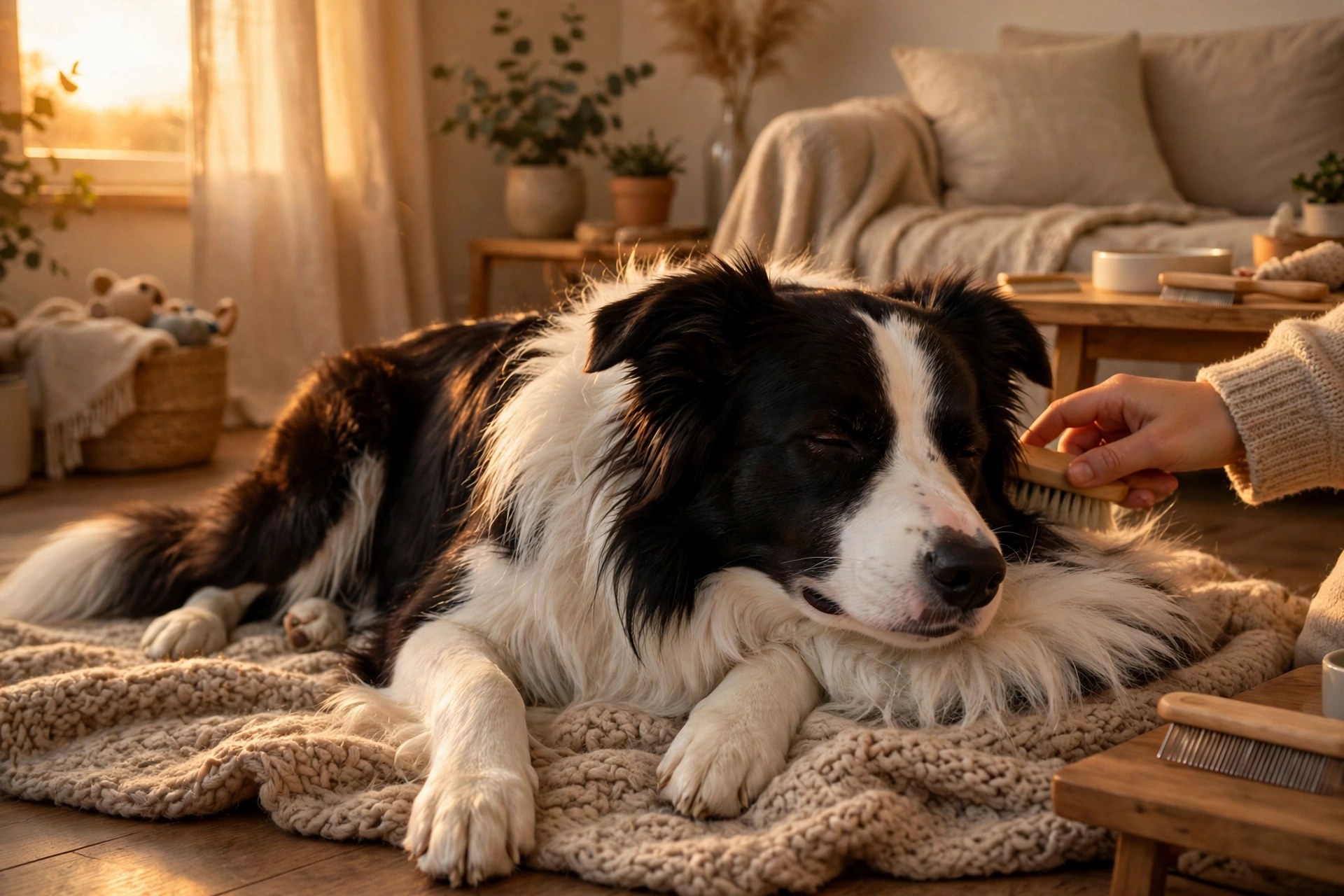
The coat looks like hard work and mostly isn’t. A thorough brush once or twice a week handles loose hair for most Collies, with extra sessions when the coat turns over in spring and autumn. Baths can wait until the dog is actually dirty. Border Collies have a weather-resistant double coat, according to the American Kennel Club breed standard, so constant washing does them no favours.
On health, buy carefully rather than memorising a list of diseases. A responsible breeder screens breeding dogs and will talk openly about hips and eyes. Ask to see the paperwork. A breeder who waves the question away has answered it.
A realistic day with a Border Collie
Here’s a rhythm that works for many owners. It’s a template, not a law.
- Morning: toilet break, a proper walk with sniffing time, breakfast in a puzzle feeder.
- Midday: a short training game or a garden search, then a real rest. Puppies and young dogs need sleep built into the day, not just hoped for.
- Afternoon: play or a second walk, kept shorter than the morning outing on hot days.
- Evening: a calm chew, a brush, and settle practice while the house winds down.
Notice what’s missing. There’s no two-hour run in there. Structure, variety, and rest do more for most Collies than sheer distance.
Beginner mistakes that cause trouble
The first is treating exercise as a contest. Run a young Collie into the ground and you don’t get a calmer dog. You get a fitter dog who now needs even more, and whose joints took a pounding while they were still growing.
The second is skipping the settle. Owners teach sit, down, paw, and a dozen party tricks, then wonder why the dog can’t lie still in the evening. Calm is a skill. Teach it on purpose and pay for it generously.
The third is punishment for herding behaviour. A Collie who nips at running children’s heels is doing something the breed was shaped to do, badly placed. Shouting won’t remove the instinct. Redirect it. Give the dog a ball to carry, a cue to perform, and management — gates, leads, supervision — while training catches up.
And the fourth? Believing the puppy stage is the hard part. Adolescence, roughly the second half of the first year and beyond, is when many owners feel the wheels wobble. Keep training. It passes, and the dog on the other side is worth it.
Frequently asked questions
Are Border Collies good for first-time owners?
They can be, if the beginner is active and enjoys training. The American Kennel Club describes the breed as highly energetic and very smart, so a first-time owner who wants a quiet, low-input dog will usually struggle, while an engaged beginner who builds a daily routine often does well.
How much exercise does a Border Collie need?
Plan on daily physical exercise plus mental work, rather than one long outing. Walks with sniffing time, play, training games and puzzle feeders together meet the need better than distance alone, and the right amount grows as a puppy matures.
Are Border Collies easy to train?
They usually learn cues quickly and pay close attention to their owner, which makes training rewarding. The catch is consistency: a clever dog notices mixed rules fast, so short, regular sessions with the same cues from everyone in the house work best.
Do Border Collies shed a lot?
They have a double coat and shed steadily, with heavier shedding when the coat changes in spring and autumn. Brushing once or twice a week handles most loose hair, with extra sessions during those coat changes.
This article was created with AI assistance and reviewed by our editorial team before publishing.
 Shiba Inu for Beginners: Loyal, Foxy, Strong-Willed
 Best Cat Breeds for First-Time Owners: 7 Gentle Picks
 10 Best Dog Breeds for First-Time Owners
Leave a Reply