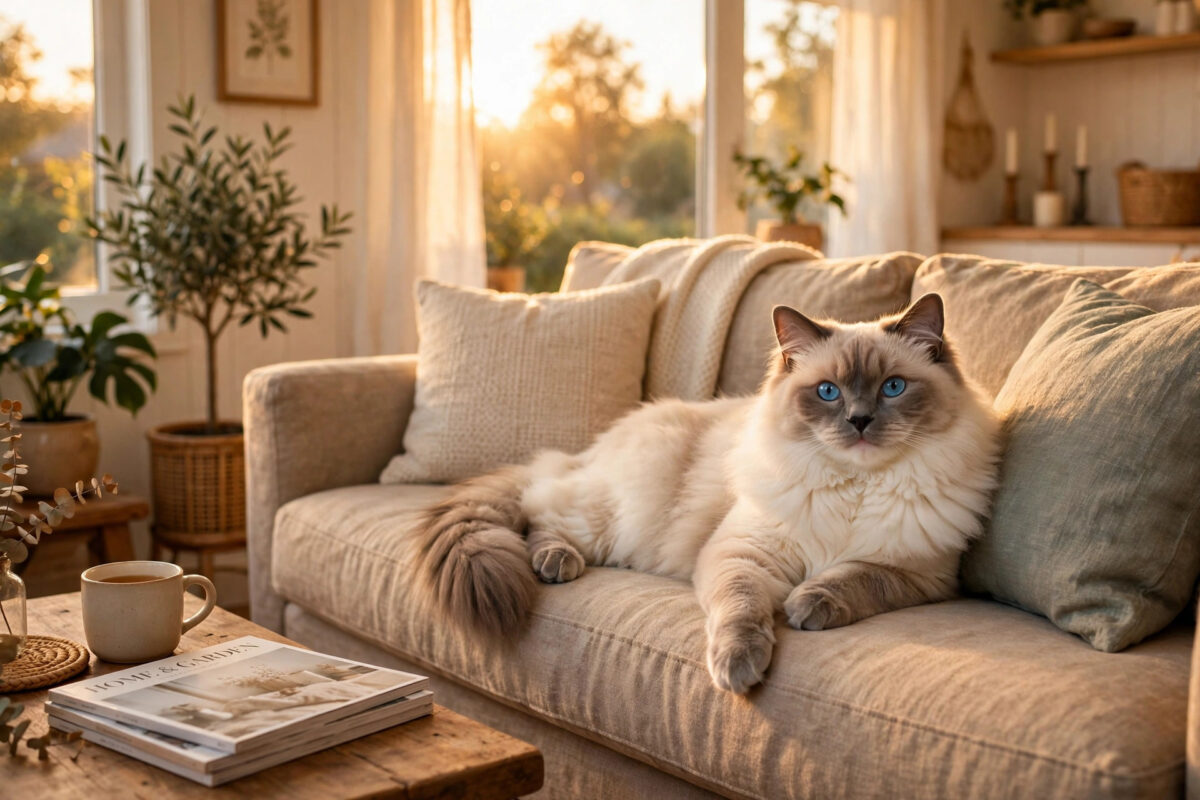
If you’re choosing your first cat, the best cat breeds for first-time owners are forgiving, friendly, and not too demanding: Ragdolls, British Shorthairs, Maine Coons, American Shorthairs, Burmese, Russian Blues, and Exotic Shorthairs. They handle beginner mistakes well, settle into home routines, and actually want company — without needing constant attention.
Picking one feels anything but simple, though. Photos all look adorable, and you’re left wondering which cat will still feel right on an ordinary Tuesday, not just on day one.
Here’s the reassuring part. You don’t need a perfect cat. You need one whose energy and grooming needs line up with the life you’ve already got.
What makes a breed easy for beginners?
Forget looks for a second. The breeds that work best for new owners tend to share a few practical traits, and those traits matter far more than coat colour.
- A steady temperament. A forgiving cat won’t hold a grudge because you picked them up awkwardly or got the feeding routine wrong in week one.
- Manageable grooming. You’ll still brush and trim nails, but you won’t be battling matted fur every single day.
- Moderate energy. Playful is fun. Wallpaper-climbing chaos at 3 a.m.? Less fun when you’re still learning.
- People-oriented, not clingy. The sweet spot is a cat who enjoys your company and can also nap happily while you’re at work.
One more thing: breed is a tendency, not a guarantee. A shy Ragdoll exists. So does a wildly outgoing Russian Blue. Narrow the field here, then judge the actual cat in front of you.
7 gentle breeds that suit first-time owners
Weight and lifespan ranges below follow breed profiles published by the Cat Fanciers’ Association (CFA) and The International Cat Association (TICA). Think of them as typical ranges for healthy adults, not promises — your vet can tell you what’s normal for your individual cat.
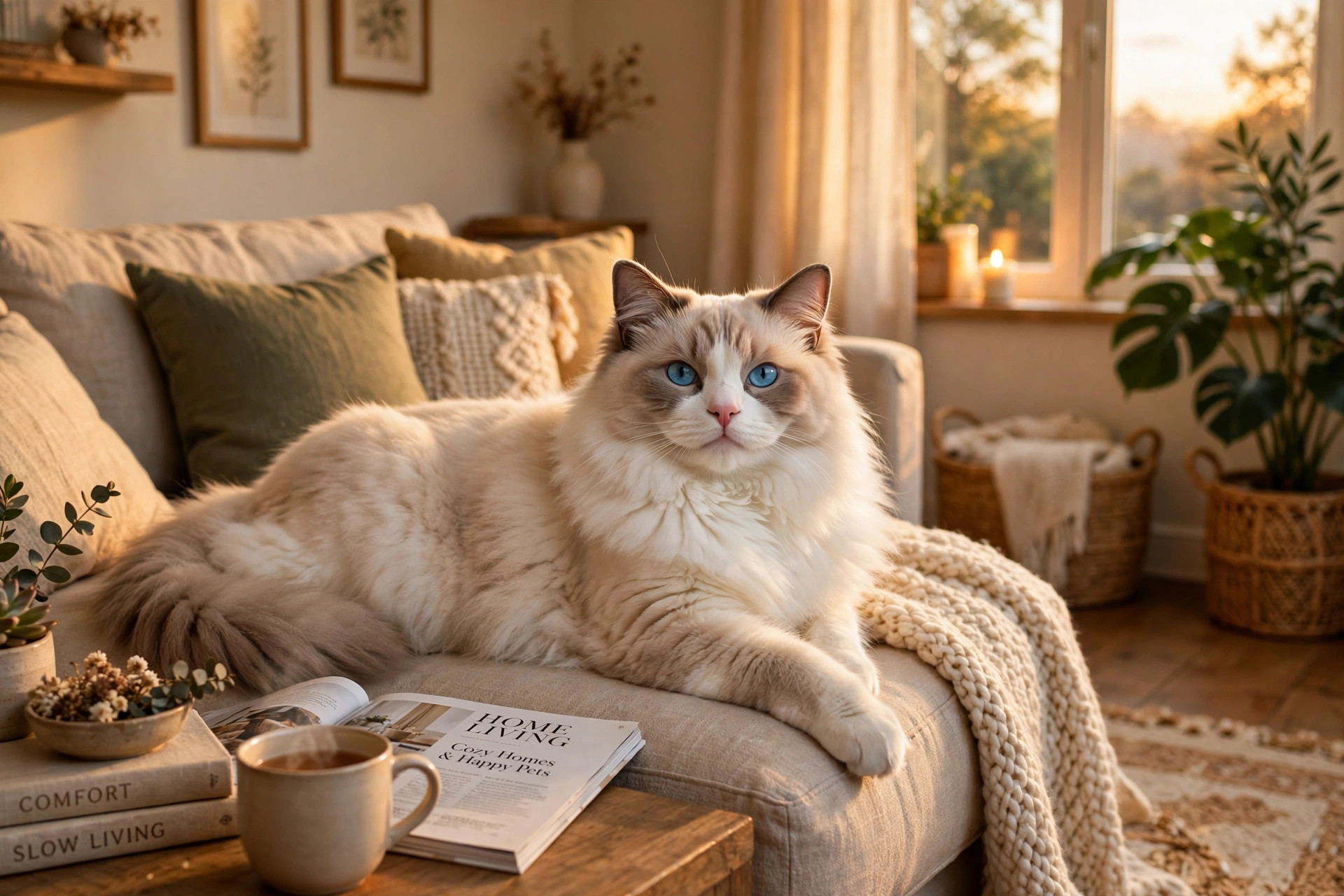
1. Ragdoll — the relaxed shadow
Ragdolls earned their name honestly. Pick one up and many of them go soft and floppy in your arms, a trait breeders and the CFA both describe as characteristic of the breed.
According to the CFA’s Ragdoll breed profile, adults typically weigh about 10 to 20 pounds and often live into their mid-teens. That’s a big, solid cat. Don’t let the size fool you, though — Ragdolls are gentle souls who tend to follow you from room to room, greet you at the door, and claim the sofa cushion right next to yours.
Why beginners love them: they’re patient, they’re not big talkers, and they generally handle household noise well. The trade-off? That glorious semi-long coat needs brushing a couple of times a week so it doesn’t mat, and Ragdolls really do want company. If you’re out for long stretches every day, consider a pair or a more independent breed.
2. British Shorthair — calm, sturdy, low-drama
If a Ragdoll sounds a bit too devoted, meet its opposite in the nicest way. British Shorthairs like you. They just don’t need to be on top of you to prove it.
TICA’s breed profile describes the British Shorthair as a medium-to-large, sturdy cat, typically weighing about 9 to 18 pounds, with lifespans often reaching the mid-to-late teens. Their dense, plush coat needs surprisingly little work — a weekly brush is a sensible routine for most of the year.
These cats suit quieter homes and people who work full days. They’re affectionate in a dignified, sit-near-you way, they’re not especially vocal, and they rarely demand entertainment. First-timers who want companionship without intensity? Start here.
3. Maine Coon — the big softie
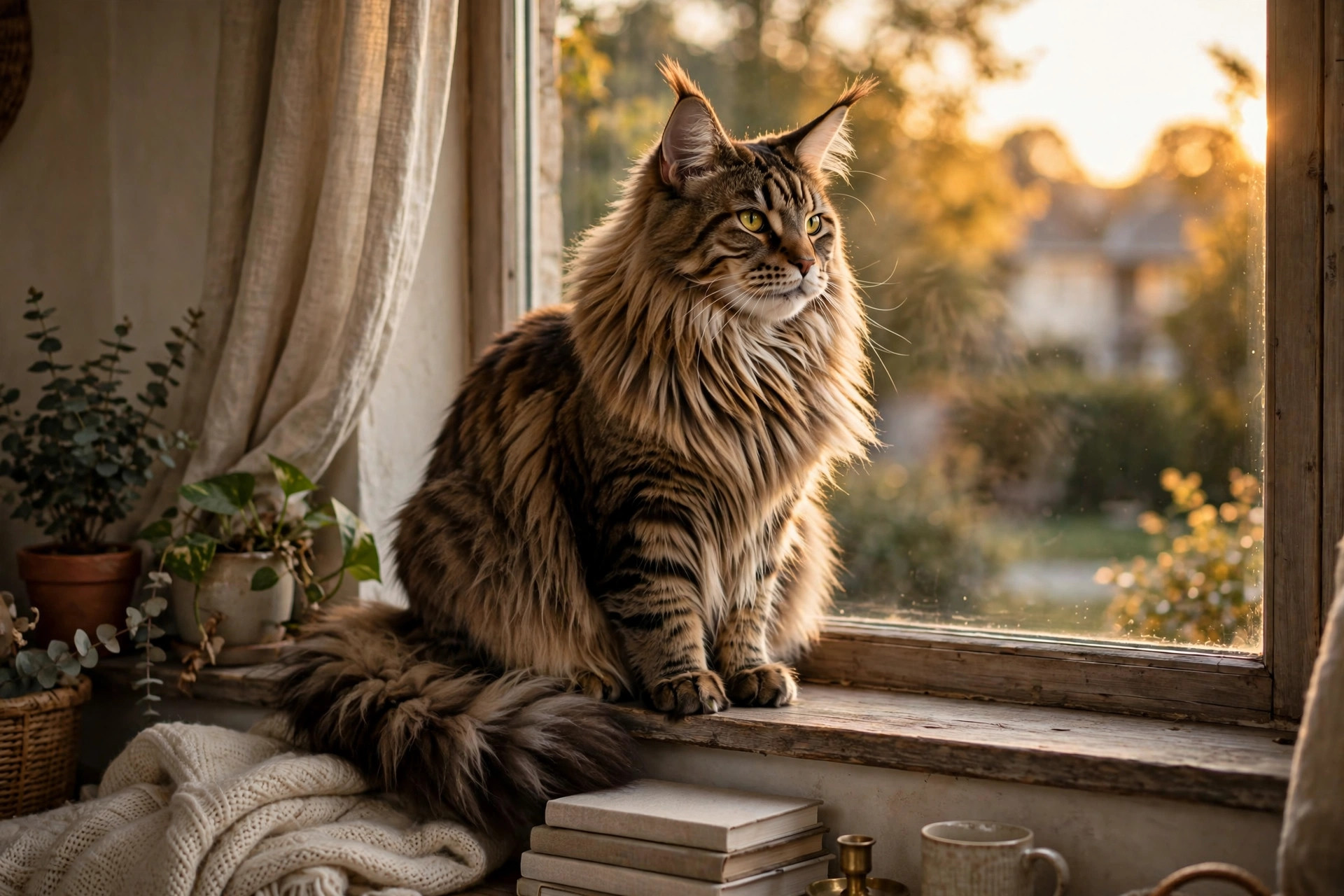
Maine Coons look imposing. Huge paws, tufted ears, a tail like a feather duster. Then one chirps at you — they often trill and chirp rather than meow, according to the CFA’s breed profile — and the whole imposing act falls apart.
The CFA lists Maine Coons among the largest domestic breeds, with adults commonly weighing about 10 to 18 pounds and living roughly 12 to 15 years. They’re famously good-natured, they tend to get along with respectful children and dogs, and they’re smart enough to learn routines fast.
The downsides: that thick coat needs regular brushing, and everything — food, carrier, litter tray — comes in the large version. Budget and space matter here.
4. American Shorthair — easygoing and adaptable
Some breeds need a sales pitch. The American Shorthair just quietly gets on with being a good cat.
According to the CFA, American Shorthairs are medium-to-large cats, typically about 11 to 15 pounds, known for good health and lifespans that often stretch from the mid-teens to around 20 years. They’ve spent a long time as working farm and household cats, and it shows in their temperament: adaptable, even-tempered, and not easily rattled.
They play, sure, and they’ll chase a wand toy with enthusiasm. But they’re equally content watching the world from a windowsill — a forgiving pick if your schedule isn’t predictable yet.
5. Burmese — friendly, playful, people-focused
Want a cat who’s involved in everything? Burmese cats will supervise your cooking, your emails, and your attempts to read a book. Nothing escapes review.
TICA describes the Burmese as a compact, muscular cat, usually about 8 to 12 pounds, with lifespans commonly in the mid-to-late teens. Their short coat is about as low-maintenance as coats get — a quick brush now and then does the job.
Burmese are chatty and bond hard with their people. That’s delightful if you’re home a lot — and a lot if you travel constantly, so be honest about your lifestyle first.
6. Russian Blue — quiet and devoted
Russian Blues pick their person and stick. They’re not usually the cat who greets every visitor at the door — guests get a careful inspection from a safe distance first — but with their own family they’re affectionate and quietly playful.
According to TICA’s breed profile, Russian Blues typically weigh about 7 to 12 pounds and often live 15 to 20 years. Their short, dense double coat sheds less than many new owners expect, though no cat is truly hypoallergenic, as the ASPCA notes in its guidance on allergies and pets.
Routine is everything here. Chaotic hours and constant rearranging will stress this breed out. Keep life calm and predictable, and you’ll have a deeply contented cat.
7. Exotic Shorthair — Persian looks, easier coat
Love the round face and flat, teddy-bear look of a Persian but dread the grooming? The Exotic Shorthair was basically created for you.
The CFA describes Exotics as medium-sized cats, typically about 10 to 12 pounds, with a lifespan commonly around 12 to 15 years. They share the Persian’s sweet, quiet temperament, but their short, plush coat needs a fraction of the upkeep — regular brushing still helps, just not the daily commitment a Persian coat demands.
Exotics are lap cats at heart. Calm homes, gentle handling, a soft bed in a sunny spot — that’s their whole wish list, and it’s a pretty easy one for a beginner to deliver.
Daily life: the stuff nobody puts in the brochure
Breed lists are fun. Daily life is where ownership actually happens, so here’s what your first months will really involve, whichever breed you choose.
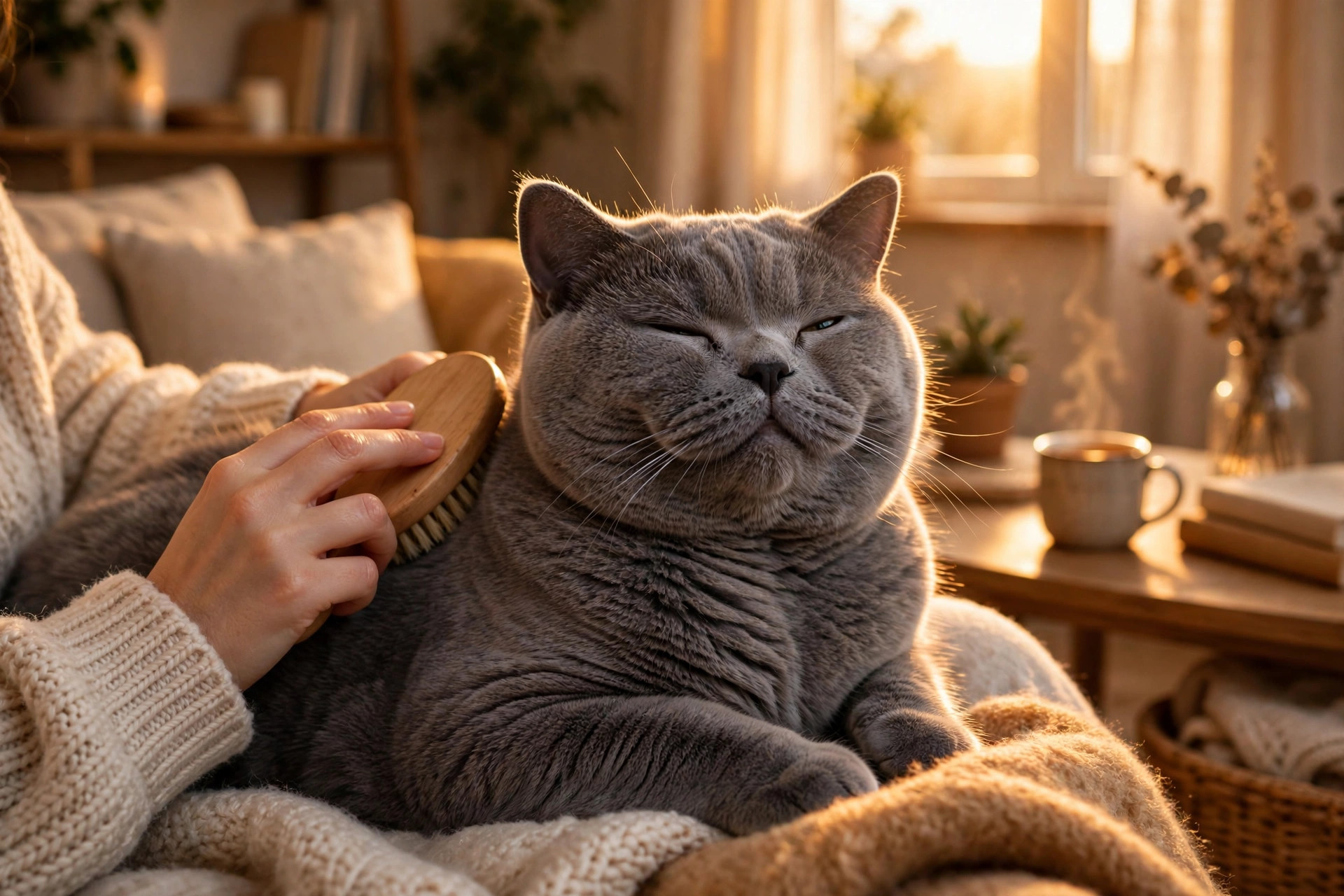
Grooming. Even short-coated cats benefit from brushing — it cuts shedding and lets you spot lumps or sore spots early. Long coats, like the Ragdoll’s and Maine Coon’s, need it several times a week. Start slow and stop before your cat gets fed up. You’re building a habit, not winning an argument.
Food and litter. Buy the food your cat is already eating and change it gradually over a week if you want to switch; sudden swaps upset stomachs. As for litter trays, the Cornell Feline Health Center recommends providing litter boxes in quiet, accessible spots and keeping them clean — most cats are far pickier about a dirty tray than about anything else in the house.
Vet visits. Book a check-up soon after your cat comes home, even if they seem healthy. The American Association of Feline Practitioners recommends regular wellness visits throughout a cat’s life — that first appointment sets baselines and sorts vaccinations.
Play. Ten to fifteen minutes of interactive play, once or twice a day, does more for behaviour than any gadget. Wand toys, cardboard boxes, a scrunched paper ball — cats aren’t price-sensitive. They’re novelty-sensitive. Rotate toys and they’ll feel new again.
How to choose between these breeds
Still torn between two or three? Match the breed to your actual routine, not your idealised one.
- You’re home a lot and want a shadow: Ragdoll or Burmese.
- You work long days and want a calm companion: British Shorthair or American Shorthair.
- You’ve got kids or a dog already: Maine Coon, with its size and easy nature.
- You keep a quiet, predictable home: Russian Blue.
- You want maximum lap time, minimum grooming fuss: Exotic Shorthair.
And if a rescue cat steals your heart instead? Mixed-breed cats make wonderful first cats too. Ask the shelter or breeder about the individual cat’s personality and energy — good answers tell you more than any pedigree.
🐾 Sharing your snacks already? Some everyday foods that are fine for you can make a cat seriously ill. Check Eaoae’s toxic foods list for cats before you share a bite — it’s a quick safety reference, not a substitute for your vet.
Frequently asked questions
What is the easiest cat breed for a first-time owner?
The Ragdoll is often the easiest starting point because Ragdolls are typically patient, people-oriented, and not very vocal, according to the CFA’s breed profile. British Shorthairs run a close second if you’d prefer a calmer, more independent companion.
Are pedigree cats better than mixed-breed cats for beginners?
No. A pedigree gives you a more predictable size, coat, and temperament, which helps some beginners plan. Plenty of mixed-breed cats are gentle, healthy, and wonderfully easy to live with — the individual cat’s personality matters most.
How much grooming does a Ragdoll actually need?
A couple of brushing sessions a week is a sensible routine for most Ragdolls. Their semi-long coat mats less than a Persian’s, but skipping for weeks invites tangles, especially behind the ears and under the front legs.
Can a first-time owner keep a cat in a small apartment?
Yes, absolutely. Most cats adapt well to small homes if they’ve got vertical space to climb, a scratching post, a clean litter tray, and daily play. Calmer breeds like the British Shorthair and Exotic Shorthair are especially well suited to apartment life.
This article was created with AI assistance and reviewed by our editorial team before publishing.
 Shiba Inu for Beginners: Loyal, Foxy, Strong-Willed
 Border Collie for Beginners: Energy, Training and Care
 10 Best Dog Breeds for First-Time Owners
Leave a Reply