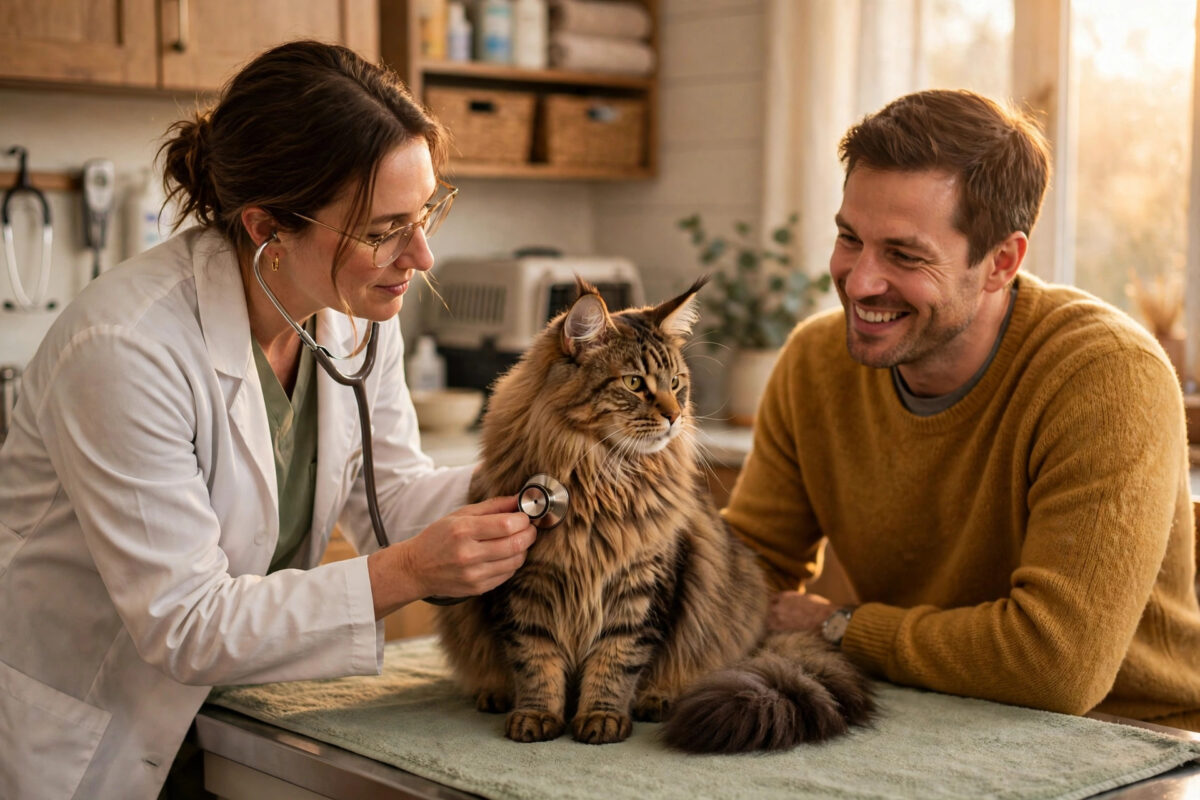
Pet insurance helps you pay for unexpected vet care by reimbursing part of eligible bills after you meet a deductible. You pick a coverage level, pay a monthly premium, visit your vet, then file a claim. It won’t cover most pre-existing conditions, so buying while your pet is young and healthy usually gives you the widest protection.

Why new owners think about it early
Most people don’t shop for insurance on a happy day. They shop for it in a waiting room, watching a screen, doing quiet maths they really don’t want to be doing.
Getting sorted early flips that around. You make the decision at your kitchen table, with time to read, compare, and ask questions.
There’s a timing reason, too. Conditions that show up before a policy starts, or during its waiting period, are usually treated as pre-existing and left out.
So a kitten enrolled young tends to have fewer exclusions than the same cat enrolled at age six. That’s not a sales trick. It’s just how the paperwork works.
What pet insurance actually covers
Plans come in three broad shapes. The names vary a little between companies, but the basic split stays the same.
Accident-only plans
These cover injuries from accidents — a broken bone, a swallowed object, a cut that needs stitches. They don’t cover illness, so a stomach bug or an infection would be on you.
Premiums tend to be lower, which makes sense. You’re buying a narrower safety net, and it’s worth being clear-eyed about the gaps.
Accident and illness plans
This is the most common middle ground. It covers accidents plus a wide range of illnesses, from ear infections to more serious diagnoses, as long as they aren’t pre-existing.
Many policies also cover surgery, hospital stays, X-rays, and prescription medication linked to a covered condition. Always check the wording, though. Two plans with the same label can draw the line in different places.
Wellness add-ons
Wellness cover is different. It’s an optional extra that helps with routine care — vaccines, annual check-ups, flea prevention, sometimes dental cleaning.
Think of it as a budgeting tool rather than a safety net. You’re prepaying for predictable costs, so do the sums on what you’d spend anyway before adding it.
| Type | Accidents | Illness | Routine care | Best for |
|---|---|---|---|---|
| Accident-only | Yes | No | No | Owners who mainly want a backstop for injuries |
| Accident + illness | Yes | Yes, if not pre-existing | No | Most new owners who want broad protection |
| Wellness add-on | Added to a main plan | Added to a main plan | Yes, up to set amounts | Owners who like routine costs smoothed out |
What it usually doesn’t cover
Start with pre-existing conditions. If your cat was already limping, scratching, or being treated for something before cover began, that condition will almost certainly be excluded.
Waiting periods catch people out, too. Most policies make you wait a short time after enrolment before illness cover kicks in, and longer for some joint or ligament problems.
Then there’s the fine print on hereditary and chronic conditions. Some plans cover them, some cap them, and some leave them out entirely.
Routine care, grooming, and elective procedures are also usually excluded unless you’ve added wellness cover. None of this makes a policy bad. It just means you need to know where your plan stops.
How the money part works
The flow is simpler than the brochures make it look. You pay the vet as usual, keep the invoice and clinical notes, then submit a claim to the insurer.
If the claim is approved, money comes back to you. You’re rarely paying nothing — you’re sharing the cost, and three settings decide how that share splits.
Deductible, reimbursement, and limits
Your deductible is the amount you pay first each year, or sometimes per condition, before reimbursement starts. A higher deductible usually means a lower monthly premium.
Reimbursement is the share the insurer pays after that. As an example, a plan might reimburse 70–90% of an eligible bill after the deductible — check the policy wording for the exact figure on any plan you’re considering.
Limits are the ceiling. Some plans cap what they’ll pay per year, per condition, or over your pet’s lifetime, and a low cap can run out fast during a serious illness.
Here’s a plain way to compare two quotes. Don’t just look at the premium — line up the deductible, the reimbursement share, and the annual limit side by side, then judge the three together.
Picking a plan for a cat like a Maine Coon
Maine Coons are big, gentle, gloriously fluffy cats, and they live indoors with most of us quite happily. Their size alone is a small practical point: medication, anaesthesia, and surgery costs often scale with weight.
Breed matters in the fine print, too. Ask your vet which health issues they watch for in Maine Coons, then check whether a policy covers hereditary conditions or quietly excludes them.
That one question can change which plan is right for you. A cheaper policy that excludes the very conditions your vet flags isn’t really cheaper.
Also look at how a plan treats ongoing care. A chronic condition can mean repeat visits and long-term medication, so check whether cover renews for that condition each year or stops after a first claim.

Questions worth asking before you enroll
Ask what’s excluded, in plain language, and get the answer in writing. If a salesperson or help page can’t explain it simply, that’s information in itself.
Ask how claims are paid and how long they typically take. You don’t need a promise — you need a clear process you can follow on a stressful day.
Ask whether you can visit any licensed vet or only a network. Most pet policies let you choose your own vet, but confirm it rather than assuming.
And ask what happens as your cat ages. Some premiums rise steeply with age, and switching later is hard because new conditions become pre-existing somewhere else.
Before you buy: a five-minute checklist
Five quiet minutes with this list will tell you more than an hour of scrolling reviews. Tick each point off for every quote you’re seriously considering.
- I’ve confirmed whether the plan covers accidents only, or accidents and illness too.
- I’ve noted the waiting periods, and I know when cover actually starts.
- I’ve checked how pre-existing and hereditary conditions are treated in the wording.
- I’ve lined up the deductible, the reimbursement share, and the annual limit side by side.
- I’ve asked my vet which conditions matter for my cat’s breed, and checked them against the policy.
- I know how to file a claim, what paperwork it needs, and that I can afford the premium as my cat gets older.
Insurance won’t make a hard day at the vet easy. But the right plan can make it a day about your cat — not about the bill.
This article was created with AI assistance and reviewed by our editorial team before publishing.
 Cat Hairballs: What’s Normal and When to Call the Vet
 Why Is My Dog Scratching? Causes and When to Worry
 Shiba Inu for Beginners: Loyal, Foxy, Strong-Willed
Leave a Reply