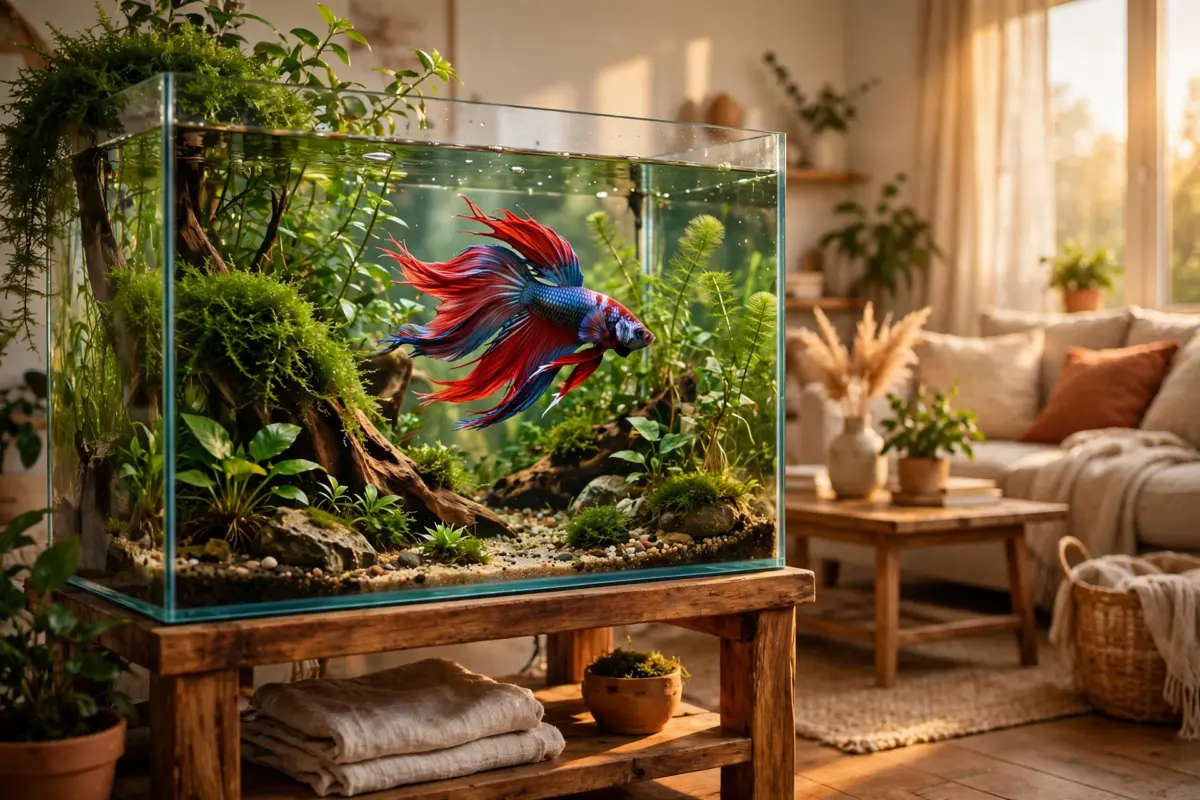
A betta thrives in a heated, filtered tank of at least 5 gallons, with water held at 76–82°F, a gentle filter, and two small pellet meals a day. Add live or silk plants, a lid, and weekly partial water changes, and a beginner setup stays clean, calm, and genuinely low-fuss.
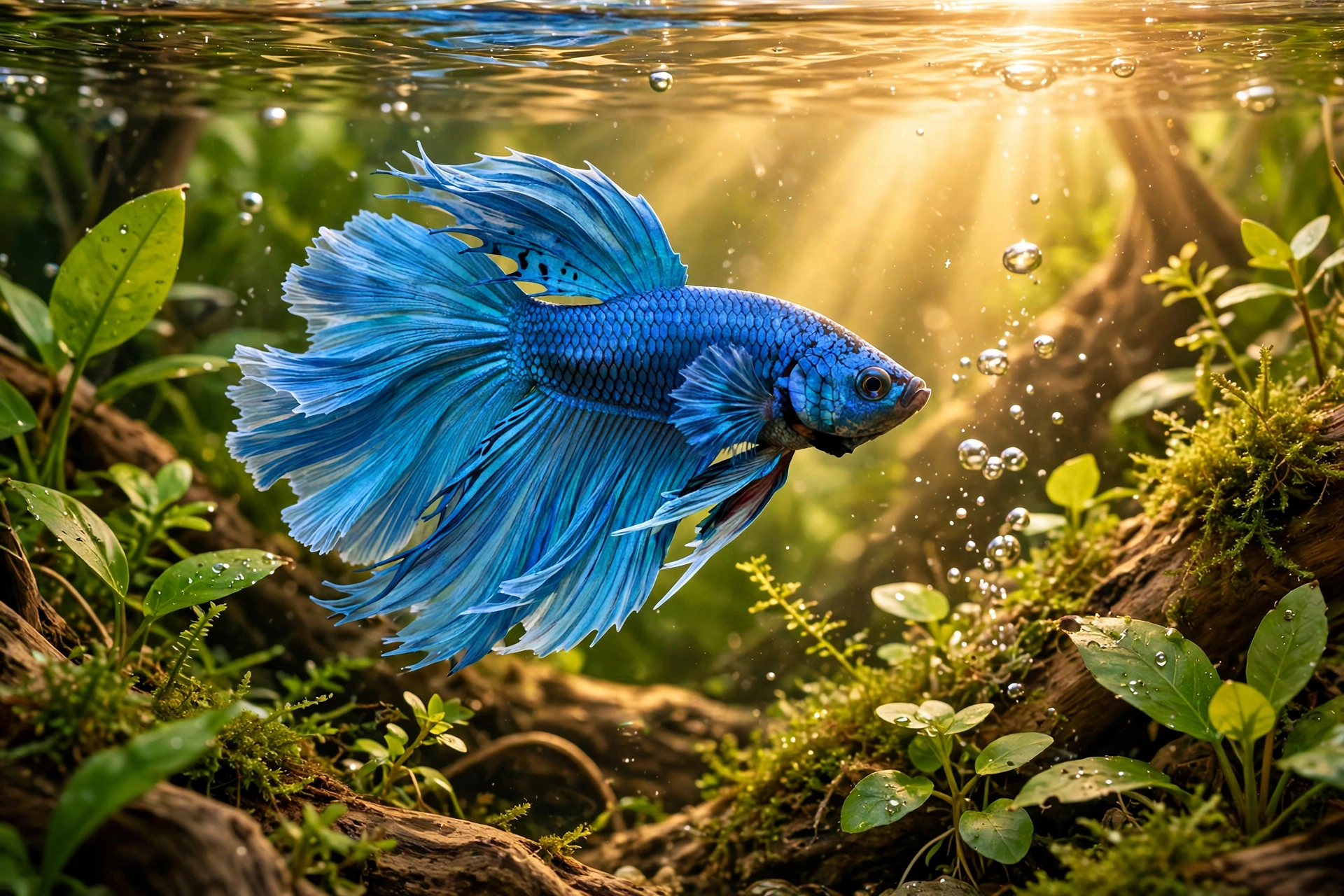
That little fish in the shop cup? He is so much more than that cup suggests. Bettas are curious. They watch you back. They learn where the food comes from, and yes, they will absolutely beg for extra.
Good news, though. You don’t need a huge setup or a science degree to keep one well. You need the right tank size, warm and stable water, a sensible feeding routine, and a few habits that take minutes a week. This guide walks through each one in plain order, so you can set up once and enjoy your fish.
What size tank does a betta fish need?
Go for 5 gallons as your starting point, and 10 gallons if you have the shelf space. According to RSPCA guidance, bettas need room to swim, explore, and rest away from the filter flow. A bigger tank also holds a steadier temperature and stays cleaner for longer between water changes, which makes life easier for you and calmer for your fish.
Small bowls and tiny cubes look tidy on a desk. The problem is what happens inside them. Waste builds up fast in a litre or two of water, temperatures swing overnight, and there’s nowhere for a betta to hide when he wants a quiet corner. You’ll be changing water constantly just to keep up.
A 5-gallon tank flips that maths. It fits a small heater and a gentle filter, it leaves real swimming room, and it forgives a beginner’s slightly late water change. A 10-gallon tank is even more forgiving, and it gives you space for more plants and hiding spots.
| Tank option | Best for | What to know |
|---|---|---|
| 2.5 gallons | Temporary housing only | Hard to heat evenly; needs very frequent water changes |
| 5 gallons | Most beginners | Solid minimum; fits a heater, filter, and plants comfortably |
| 10 gallons | Anyone with the space | Steadiest water; easiest routine; room for a richer planted layout |
Whichever size you pick, add a lid. Bettas jump. A snug lid also slows evaporation and keeps curious cats from going fishing.
What water temperature and conditions do bettas need?
Keep the water at 76–82°F (about 24–28°C) with an adjustable aquarium heater and a simple thermometer to check it. Bettas come from warm, shallow waters in Southeast Asia, and guidance from the RSPCA and most aquatic vets points to that same warm range. Use a gentle filter and treat tap water with conditioner before it goes in.
Cold water is the quiet problem beginners miss most. A room-temperature tank in a cool house can sit well below what a betta likes. He’ll get sluggish, eat less, and pick up illnesses more easily. A small heater — 25 watts suits most 5-gallon tanks, 50 watts suits most 10-gallon tanks — holds things steady day and night.
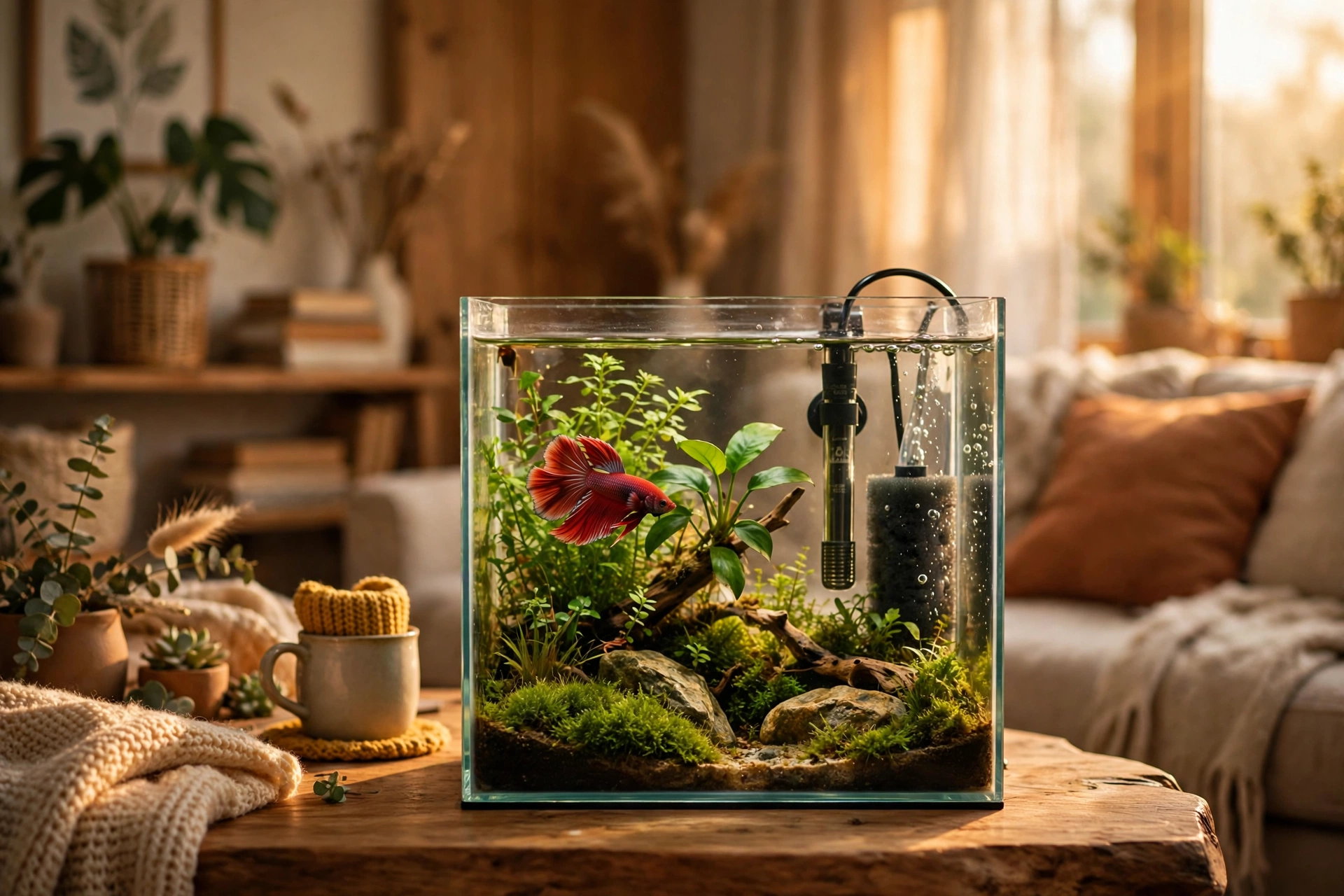
The filter should move water softly. Long, flowing fins act like sails, so a strong current leaves a betta tired and pushed around. A sponge filter or a hang-on-back filter turned down low works well. If your betta keeps getting blown across the tank, the flow is too strong.
Before your fish comes home, cycle the tank. That means letting helpful bacteria grow in the filter so waste gets broken down safely instead of building up as ammonia. Fishless cycling with a test kit takes a few weeks, and it’s worth the wait. Test strips or a liquid kit for ammonia, nitrite, and nitrate turn guesswork into a quick check you can trust.
Setting up the tank, step by step
Start with the basics in this order, and you won’t have to redo anything later:
- Rinse the tank and gravel with plain water. No soap, ever — residue harms fish.
- Add substrate, then place the heater and filter (don’t switch them on dry).
- Fill with tap water treated with conditioner, then switch everything on.
- Add plants and a hide — a smooth cave, a leaf hammock near the surface, or a soft silk plant.
- Run the cycle, test the water, and only then bring your betta home.
Plants do more than look pretty. Live plants such as anubias, java fern, and amazon sword soak up waste, give shade, and offer resting spots close to the surface where bettas like to nap. If live plants feel like a step too far right now, pick silk plants instead. Skip sharp plastic ones — they can tear long fins.
Lighting stays simple. Six to eight hours a day on a timer keeps plants happy and algae in check. Place the tank away from direct sun and drafts, both of which nudge the temperature around.
How much and how often should you feed a betta?
Feed a small pinch of betta pellets twice a day — roughly 3–4 pellets per meal for an adult — and remove anything uneaten after two minutes. A betta’s stomach is tiny, about the size of its eye, so little and often beats one big feed. Skip a meal once a week if your fish looks round; a lean betta is a healthier betta.
Quality pellets made for bettas make a good staple because they’re high in protein. Bettas are insect eaters at heart. Rotate in frozen or freeze-dried bloodworms, daphnia, or baby brine shrimp two or three times a week for variety, and your fish’s colour and energy will show it.
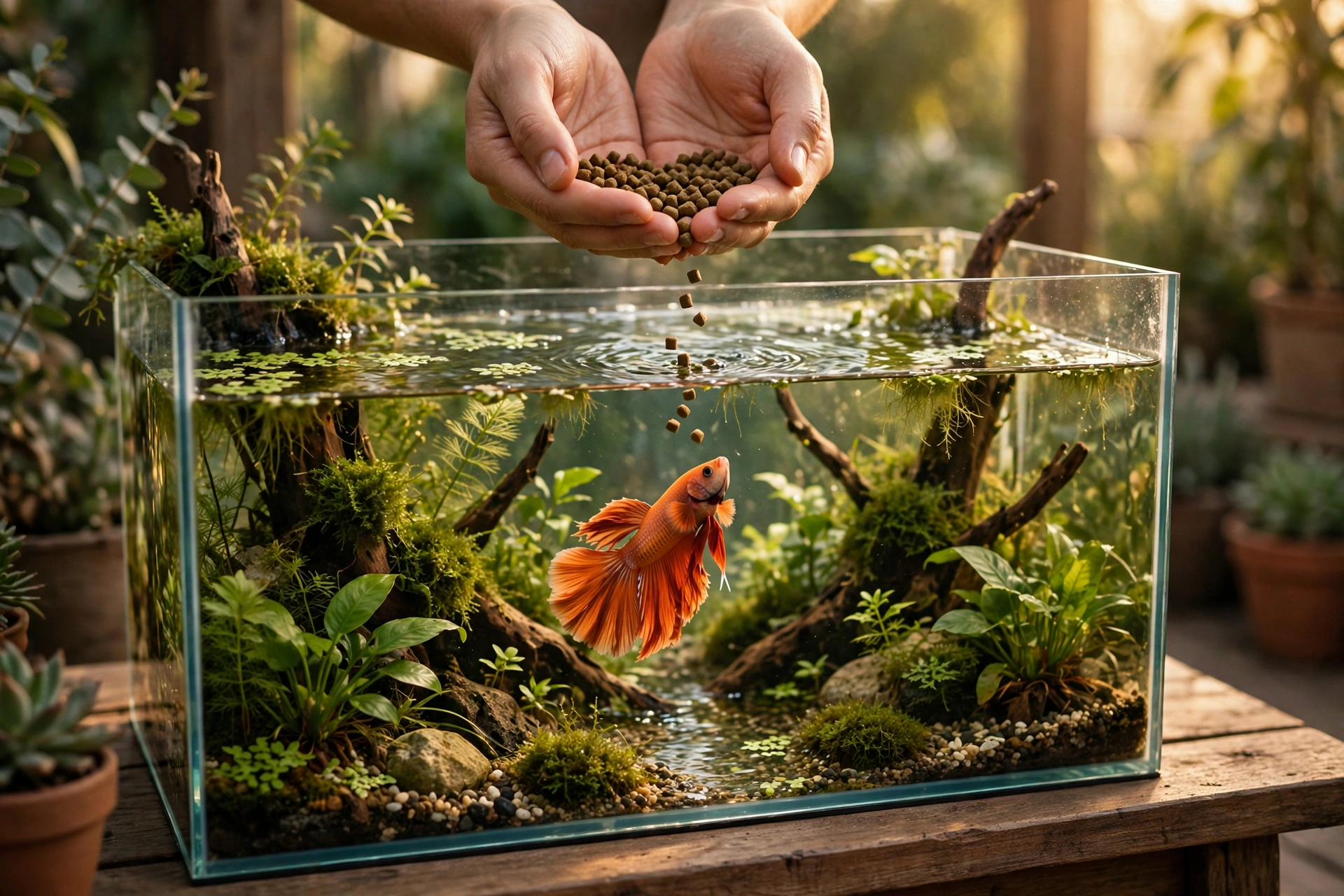
Watch how he eats. A healthy betta rushes up, grabs a pellet, and looks for the next one. If food sinks past him or he spits it out again and again, try a smaller pellet size. If uneaten food keeps hitting the gravel, you’re feeding too much — and that extra food fouls the water faster than anything else in a small tank.
Your weekly routine, without the stress
Once a week, change about 25–30% of the water. Siphon the gravel lightly, wipe algae off the glass, and refill with conditioned water matched to the tank’s temperature. The whole job takes 15 minutes in a 5- or 10-gallon tank. That’s it. That’s the core routine.
Don’t replace all the water at once, and don’t scrub the filter clean under the tap. The bacteria living in the filter media do the heavy lifting for water quality. Rinse the sponge gently in a bucket of removed tank water when flow slows down, and leave it at that.
A quick daily glance helps too. Is he active? Are his fins smooth, not clamped or torn? Is the thermometer in range? Thirty seconds of looking catches most problems while they’re still small and simple to fix.
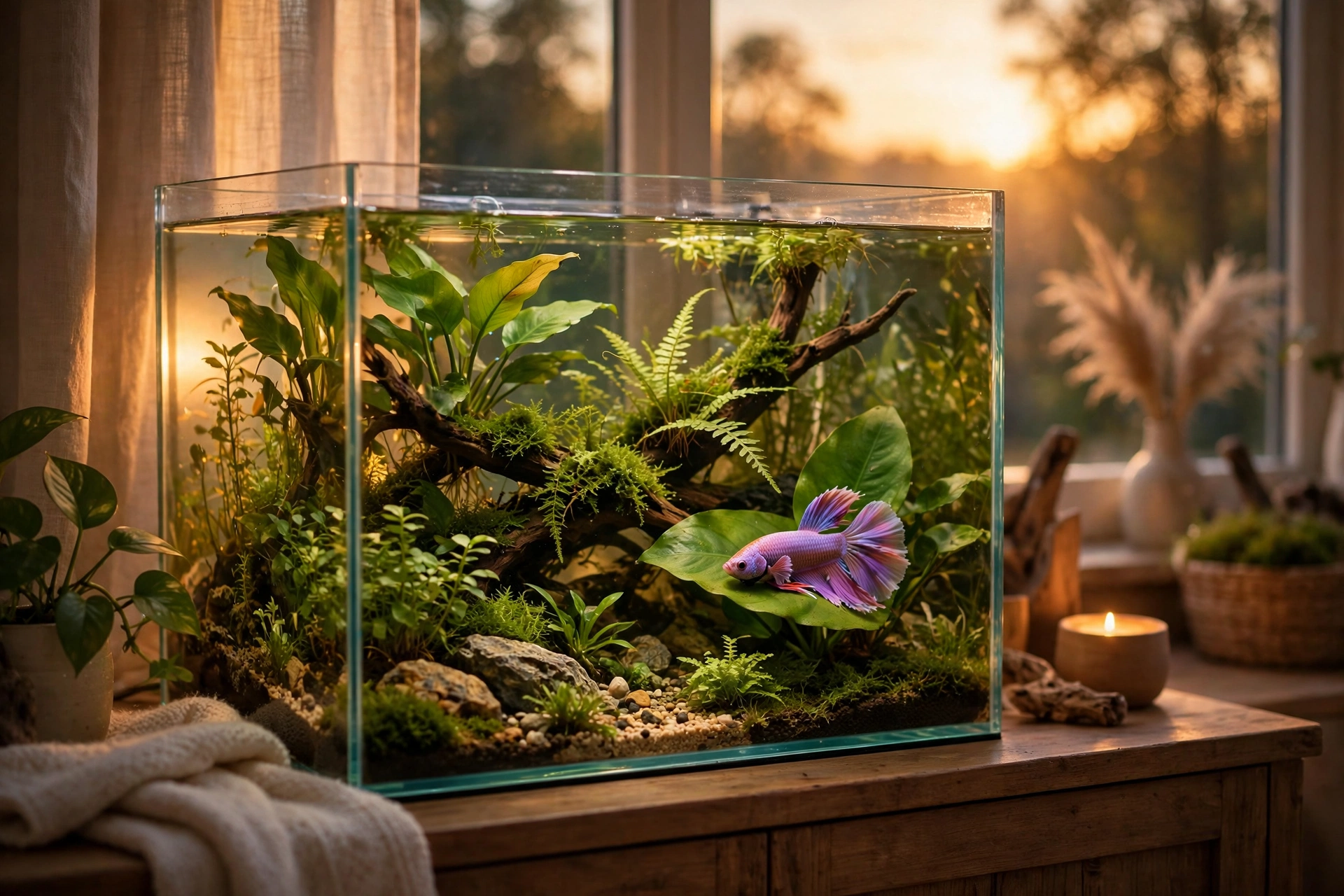
One fish, or company?
Keep a male betta on his own. Males fight — that’s where the name Siamese fighting fish comes from — and two males in one tank will injure each other. A single betta in a planted 5- or 10-gallon tank isn’t lonely; he’s relaxed, and he’ll use every inch of the space.
In a 10-gallon tank or bigger, a few peaceful tankmates can work: snails are the safest first choice, and some keepers add small shrimp. Add any companions slowly, watch the first days closely, and have a backup plan if your betta turns out to be a chaser. Every fish has a temperament. Some share. Some really don’t.
Myths and facts about betta care
Myth: Bettas live in tiny puddles, so a small bowl is fine.
Fact: In the wild, bettas live in shallow but wide rice paddies and slow streams that stretch far beyond a puddle, according to RSPCA guidance on their natural habitat. Shallow doesn’t mean tiny — a 5-gallon tank copies the space far better than a bowl.
Myth: Bettas don’t need a heater because shops keep them in cups.
Fact: Shop cups are short-term holding, not housing. Bettas are tropical fish that do best at 76–82°F, and a heated tank is where you’ll see their real colour and personality come out.
Myth: A betta will just eat plant roots, so feeding is optional.
Fact: Bettas are carnivores that need protein-rich pellets and insect foods, fed twice a day in small amounts. A fish nibbling a root is a hungry fish, not a fed one.
Bottom line: your first-week checklist
- Tank of 5 gallons or more, with a snug lid
- Adjustable heater plus a thermometer, set for 76–82°F
- Gentle filter, and a cycled tank before your fish arrives
- Water conditioner for every fill and top-up
- Live or silk plants, plus a hide and a resting leaf near the surface
- Betta pellets, fed twice a day, 3–4 pellets at a time
- A weekly 25–30% water change in your calendar
Get those seven things in place and you’re not guessing any more — you’re keeping a betta properly. He’ll greet you at the glass. He’ll patrol his plants like he owns them. And honestly? Watching that happen in a tank you set up well is the best part of the whole hobby.
This article was created with AI assistance and reviewed by our editorial team before publishing.
 Syrian Hamster Care Guide: Home, Diet and Handling
 Bringing Home a New Pet: The Complete First-Month Guide
 First Rabbit Care Guide: Housing, Hay and Daily Routines
Leave a Reply